South Dakota
Where history is carved into the land.
Deadwood · Rapid City · Mount Rushmore · Pierre · Sioux Falls · Aberdeen
The Journey
South Dakota was a state I had been looking forward to for a long time.
The Black Hills, the Badlands, Mount Rushmore, Native American history, its tiny but fascinating Jewish story, the good, the bad, and the sad. There was so much here I wanted to understand.
We entered from Wyoming and started in Deadwood. Walking through the historic streets felt like stepping into an old Western movie, but I was especially fascinated by how much Jewish history was hiding there. Jewish merchants and families once played an important role in the town, and street after street seemed to reveal another Jewish name, home, or business. For a brief moment, this wild Western mining town had something resembling a little Jewish shtetl of its own.
From there we made our way to Rapid City, which became our base for a few days.
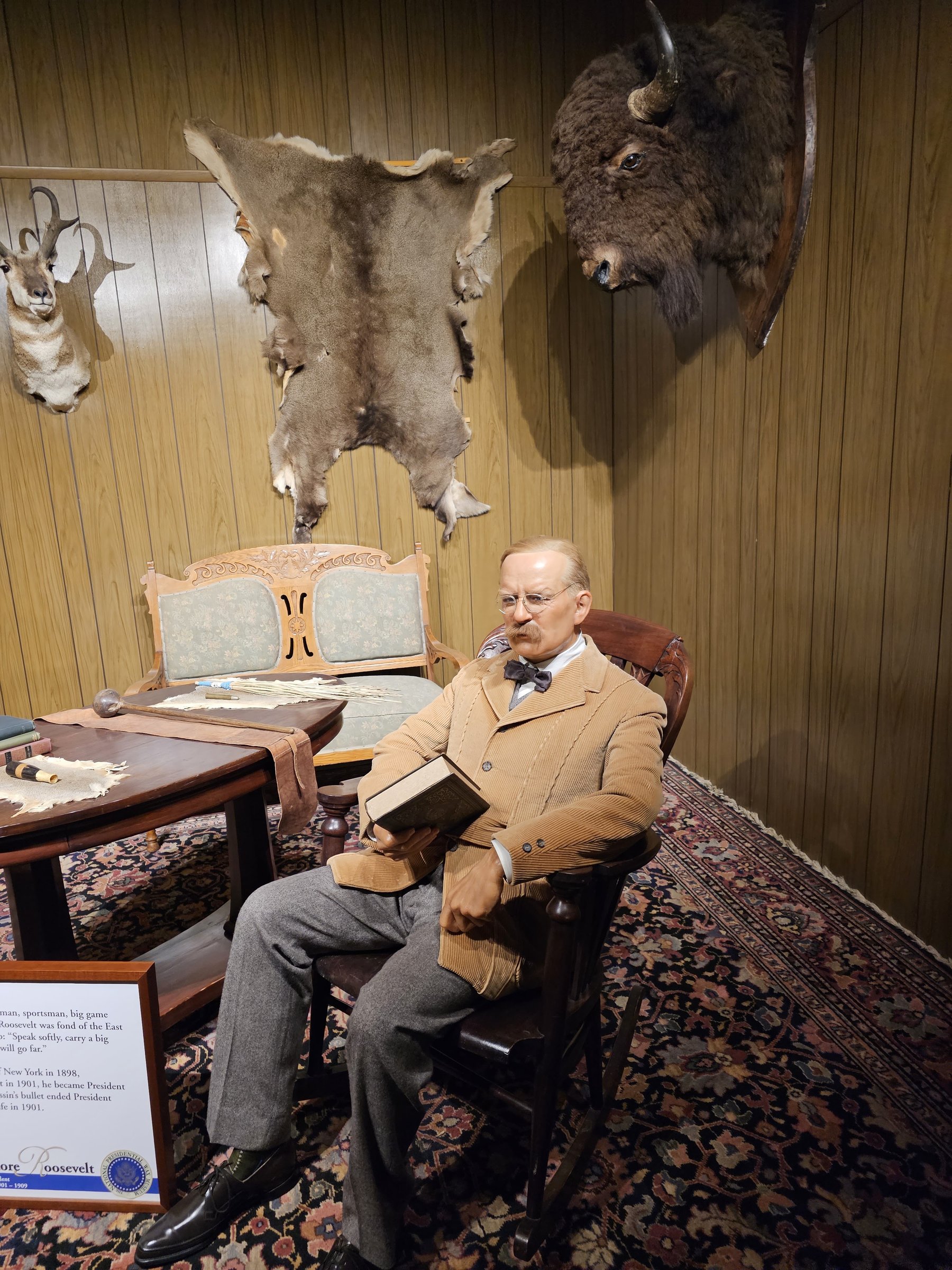
The presidential theme was everywhere. At the National Presidential Wax Museum, the girls saw life size figures of the presidents they had been learning about, got behind a presidential podium, gave their own speeches, and even watched themselves on television.
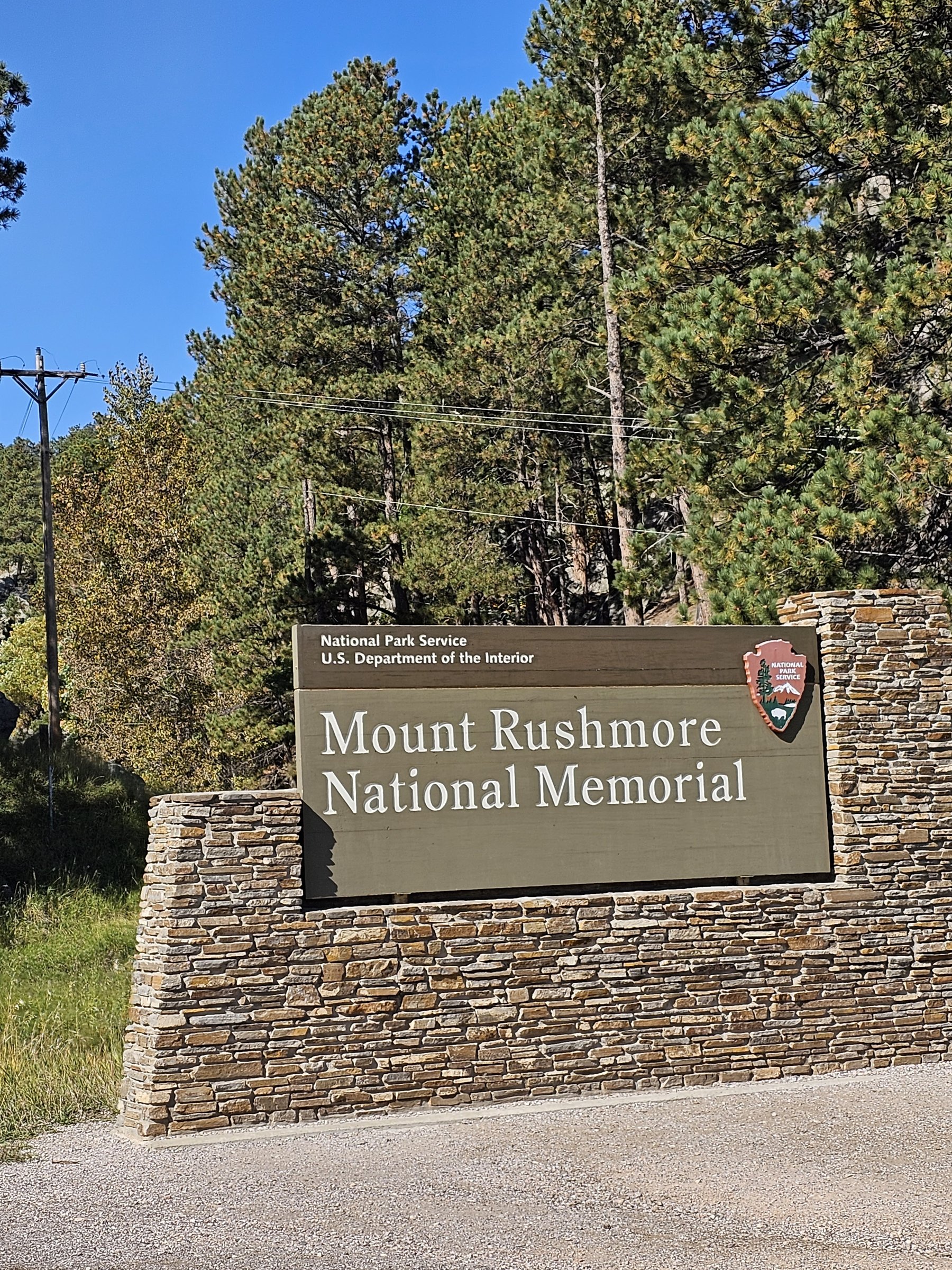
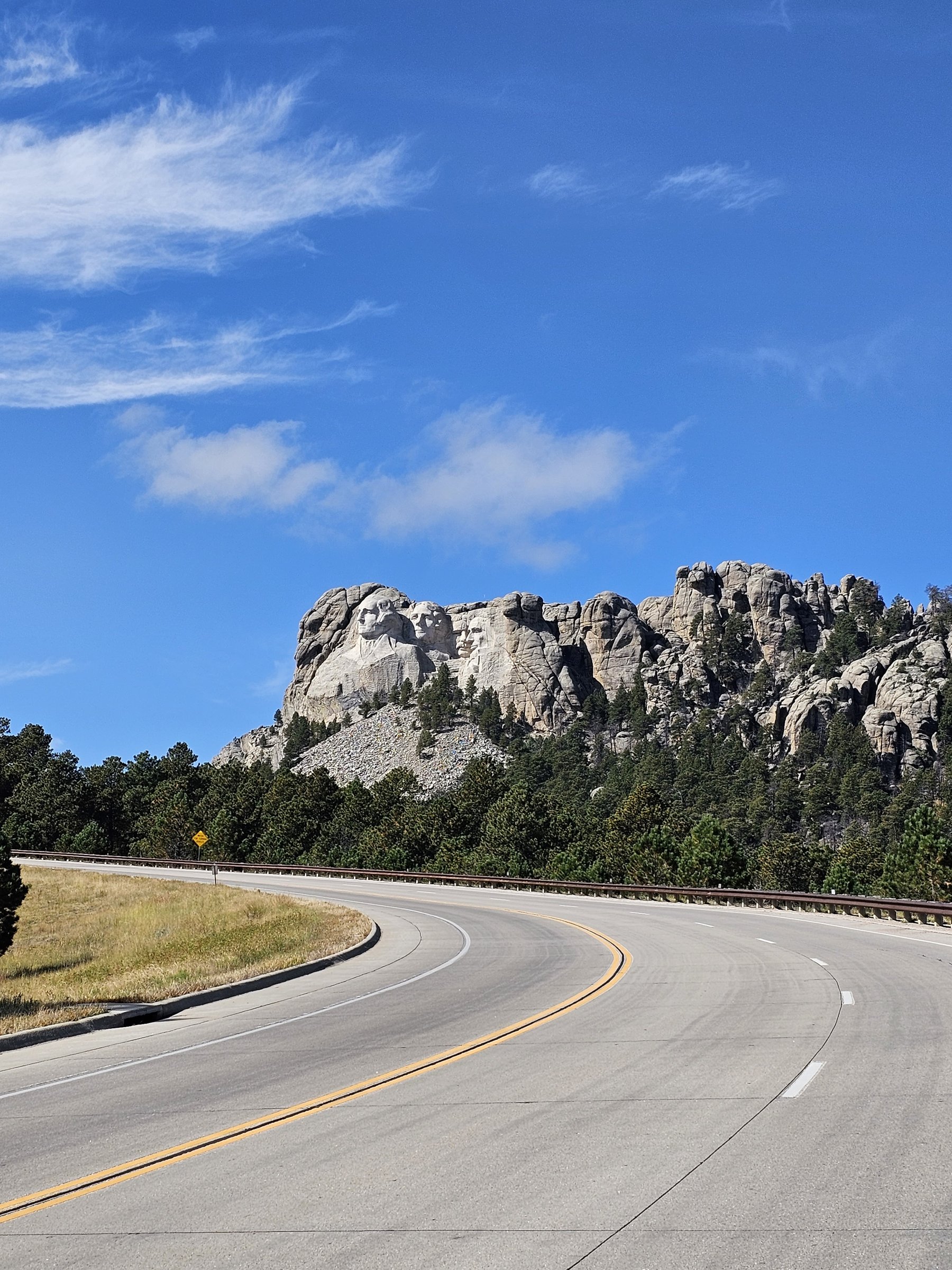
Then came Mount Rushmore.
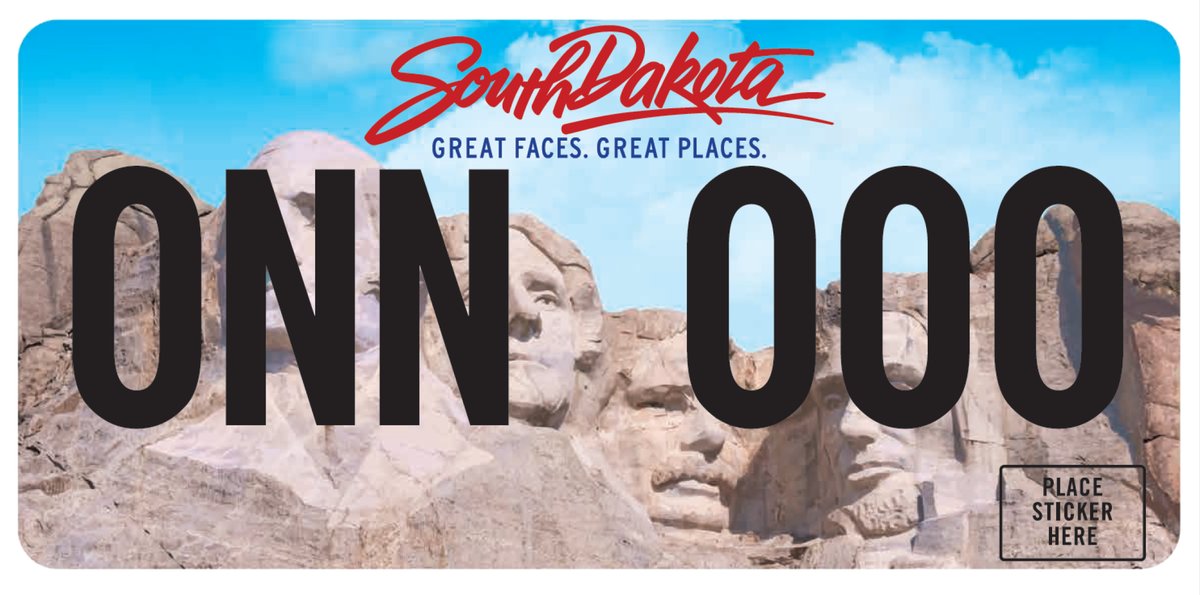
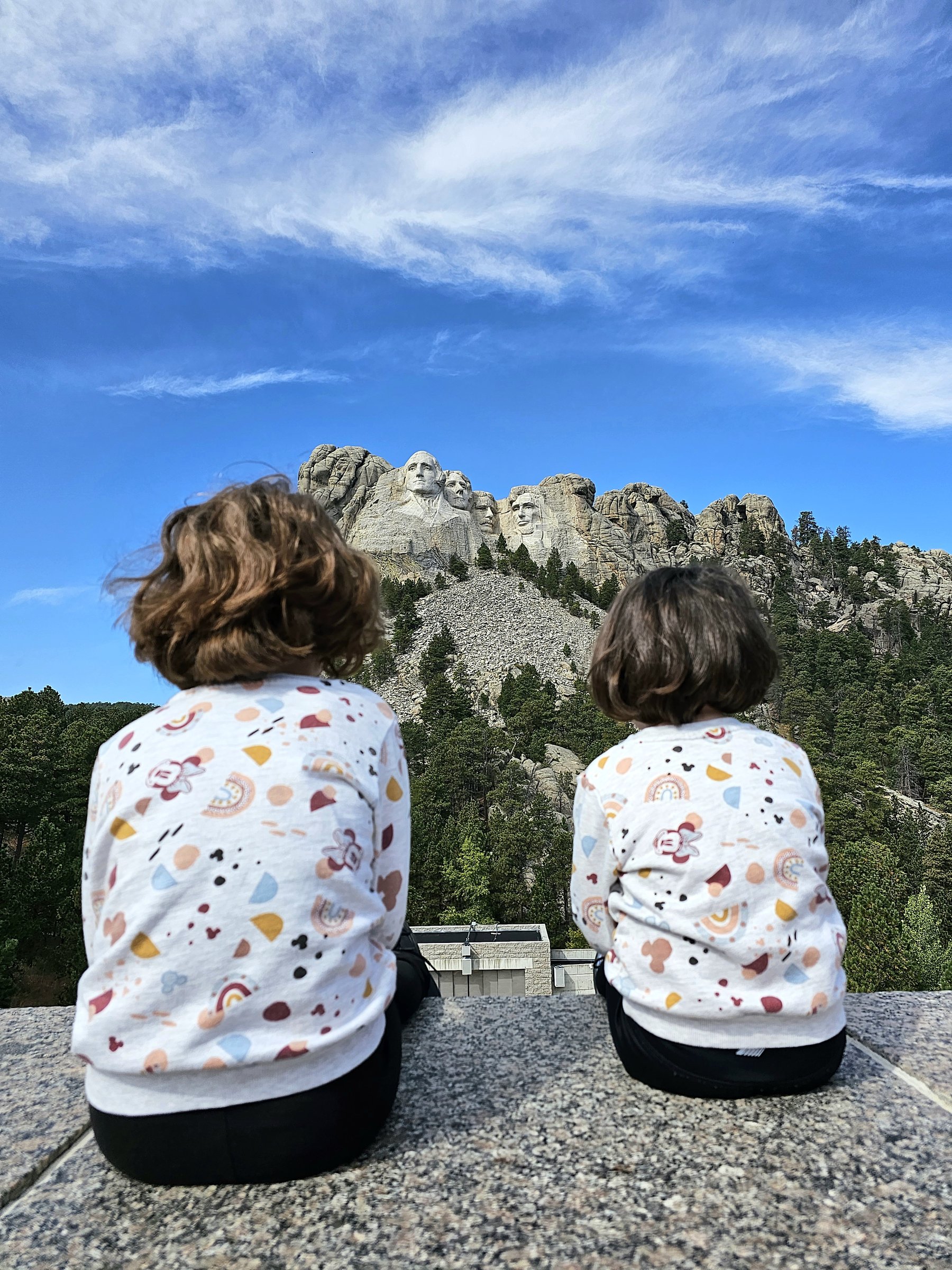
It was far more impressive in person than I expected. Four enormous faces carved into the mountain, surrounded by the Black Hills, suddenly felt much larger than the photographs we had seen our entire lives.
Charny, however, made one condition very clear. We were not going to show the girls Mount Rushmore without also telling them the story of the Native people whose land this was and visiting the Crazy Horse Memorial. I nodded.
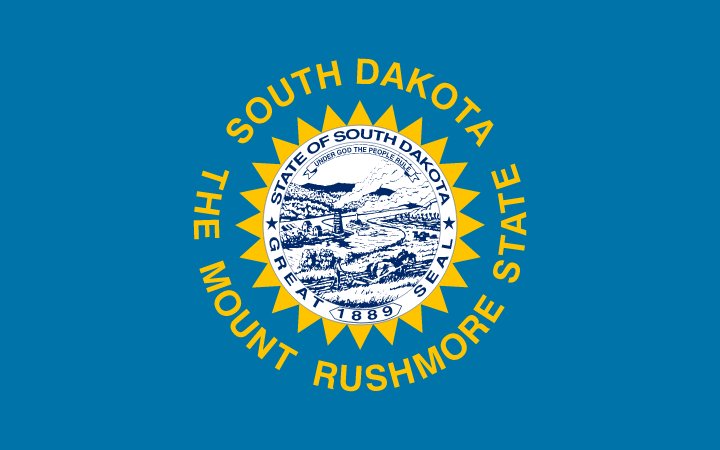
As we approached Mount Rushmore, the girls walked past the flags of all fifty states. By then, they had visited most of them and excitedly tried identifying the flags themselves. Hawaii was easy. New York, they proudly declared, was still their favorite. Although the flag is not very impressive amongst its peers.
While there, we met an older couple from eastern South Dakota with a cute little puppy. Naturally, the girls asked if they could play with it.
We started talking.
The man told me he was almost ninety years old and a devout Christian. Then, almost unexpectedly, he looked at me and said, “We love the Jewish people, and anyone who doesn’t is not a real Christian.”
I was moved.
I told him that I loved my Christian brothers too, that Jesus was one of us, and that the founding idea of the country whose presidents were carved into the mountain behind us was precisely that people should not be defined by the God they pray to, but treated with equal dignity and belonging.
I asked him for a hug. His wife laughed. I insisted. The old man gave in.
It was short, and he removed himself pretty quickly, but it was probably one of the warmest hugs I had received in a long time.
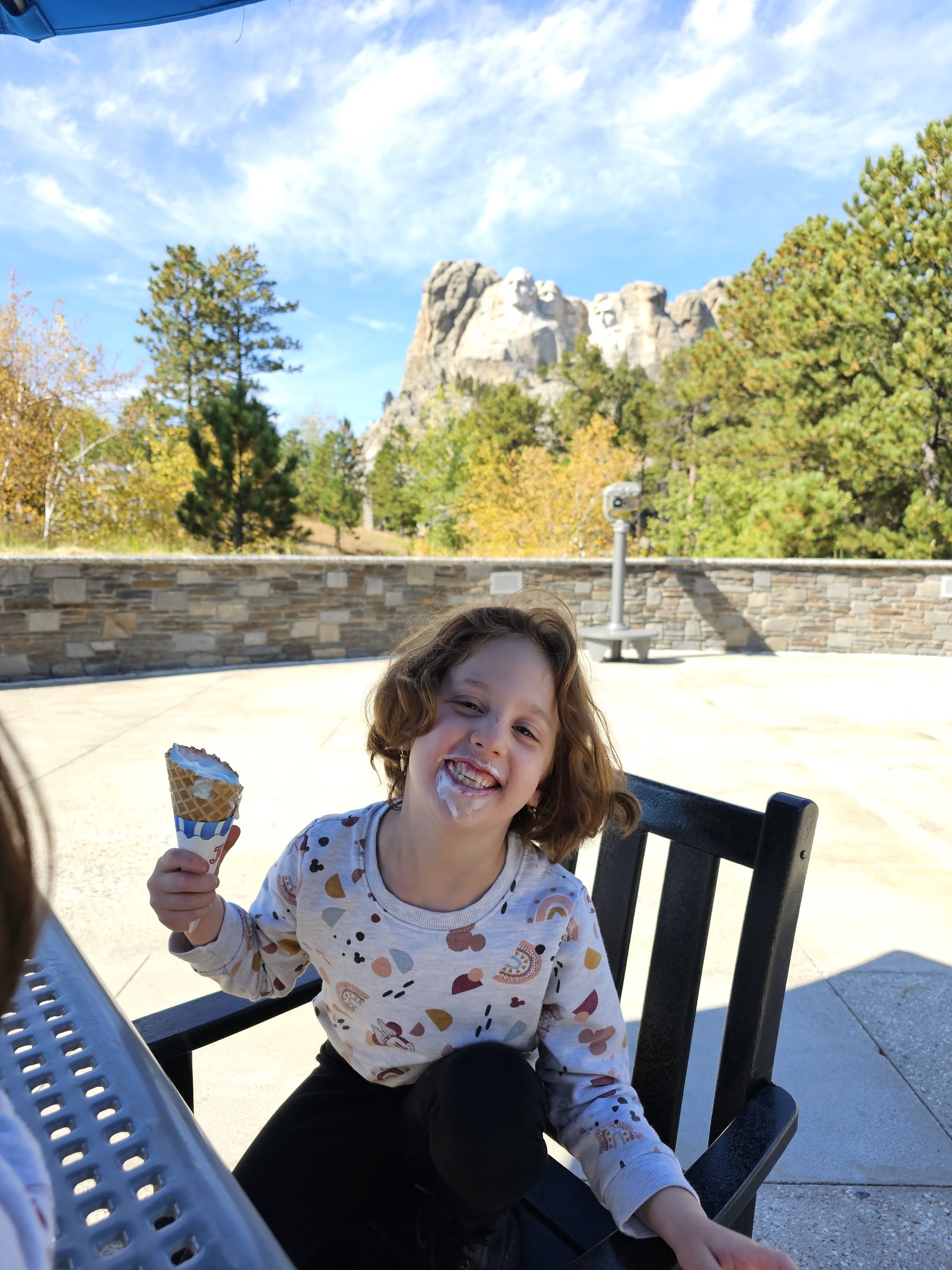
Moved by the moment, I finally gave in to Leah’s repeated request for ice cream. We sat on the deck overlooking the presidents, wondering what flavors they had back then.
Surely not salted caramel.
I took another spoonful, looked Jefferson in the eye and thought, you may have written history, but I have salted caramel ice cream.
From there, we made the short drive to the Crazy Horse Memorial and paid our respects to the Oglala Lakota leader whose image is still being carved into the mountain. We explained to the girls the painful history of the Black Hills, land sacred to the Lakota that was taken despite treaty promises.
As we left, Rachel looked back and said, “I’m sure Lincoln wouldn’t be happy that they put him there.”
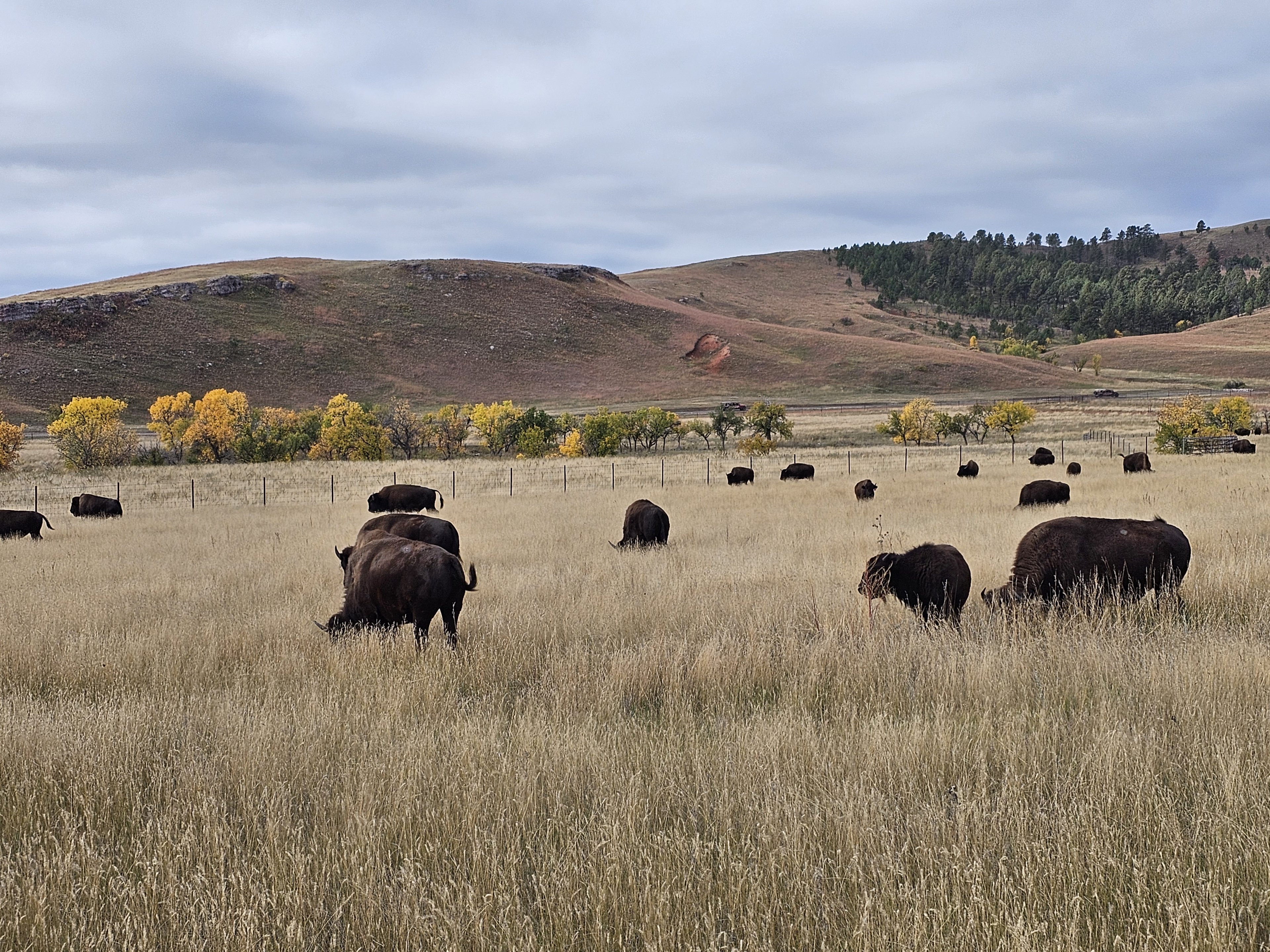
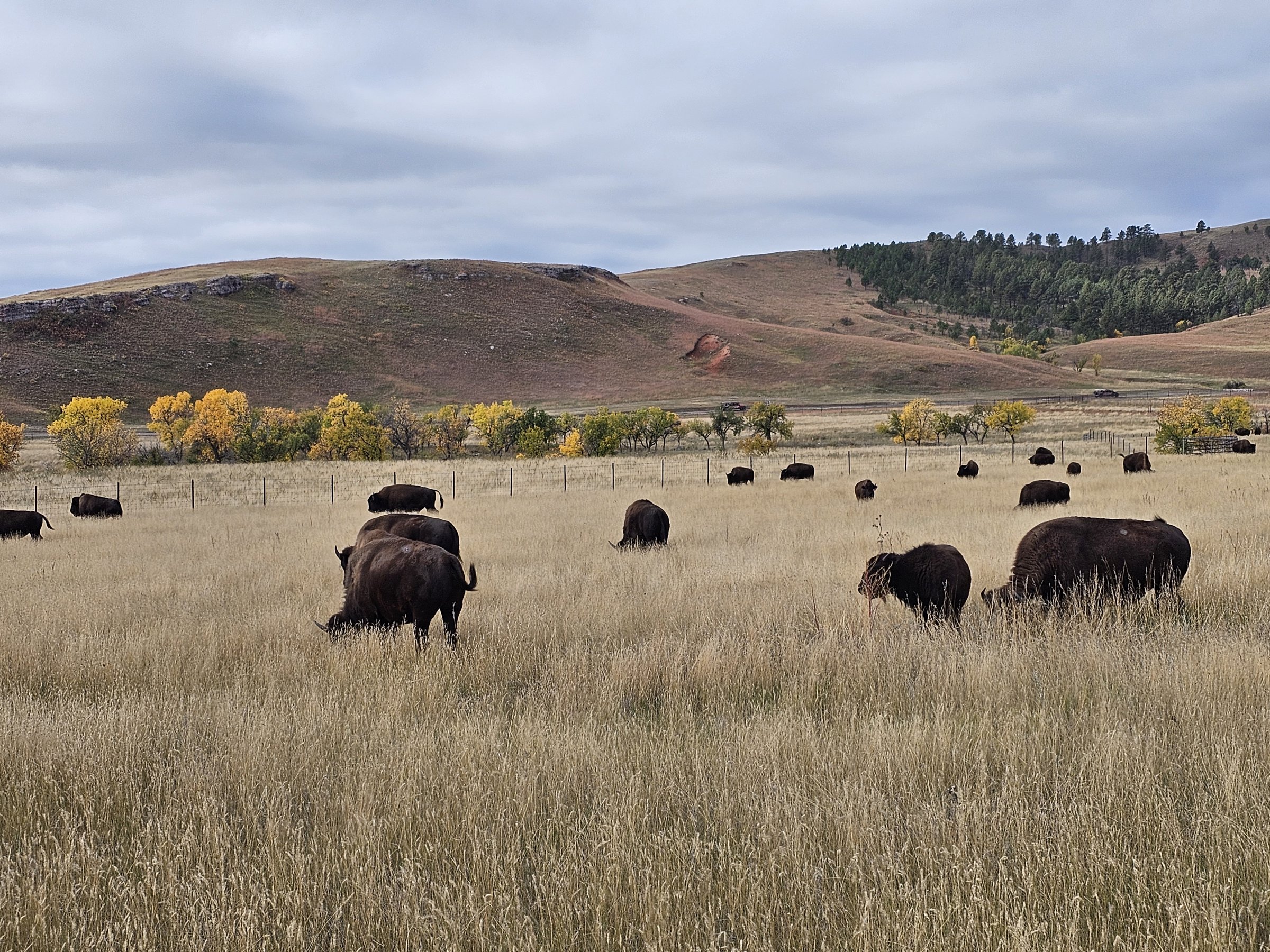
We continued into Custer State Park, where enormous herds of bison reminded us exactly what part of the country we were in.
After another night in Rapid City, we headed east. At Badlands National Park, we stopped at Pinnacles Overlook and looked across layers of jagged rock, deep valleys, and colors that seemed almost painted into the land.
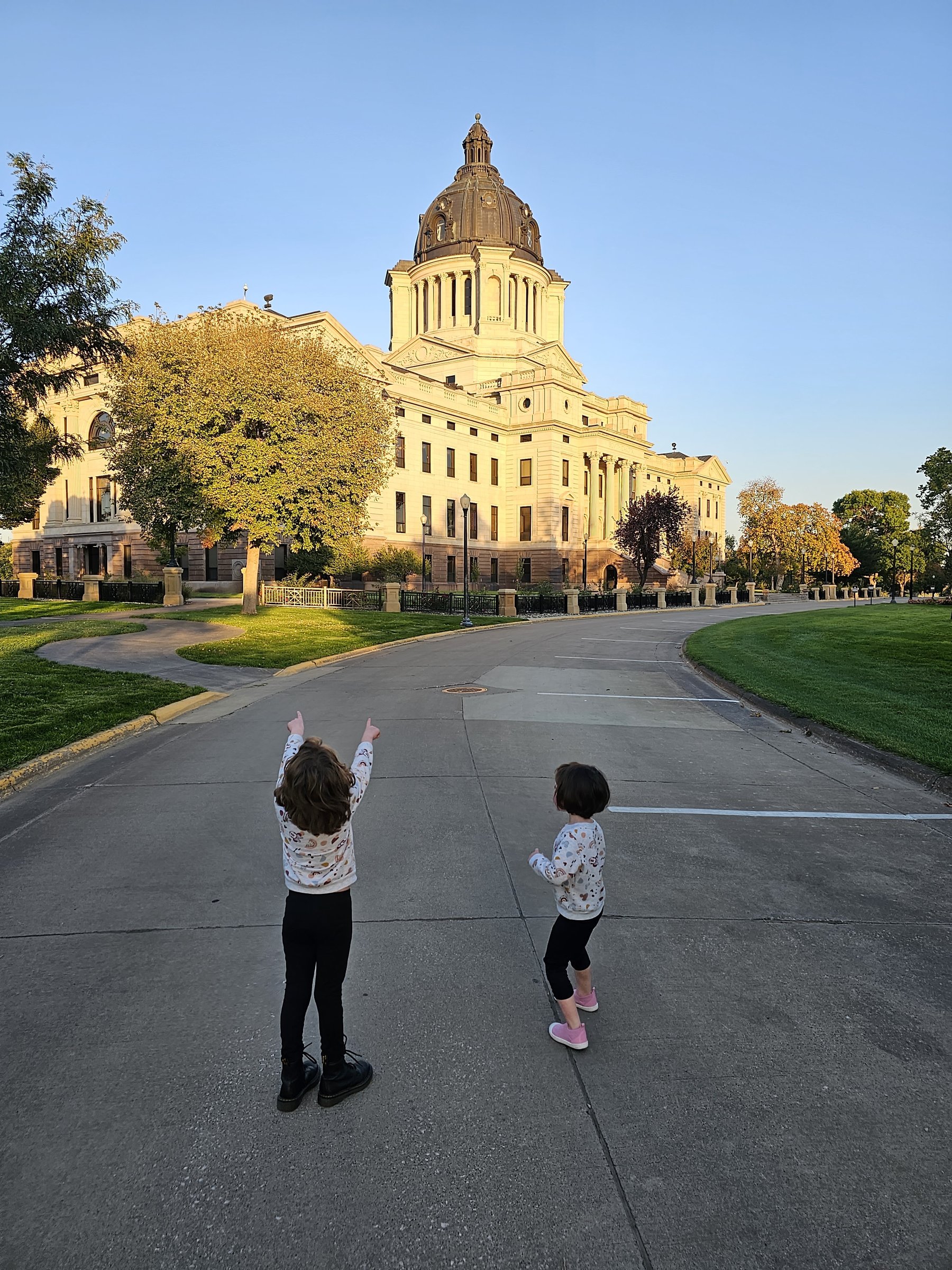
Eventually we reached Pierre, one of the most charming state capitals we visited. The Missouri River runs beside the city, and everything felt calm and beautiful.
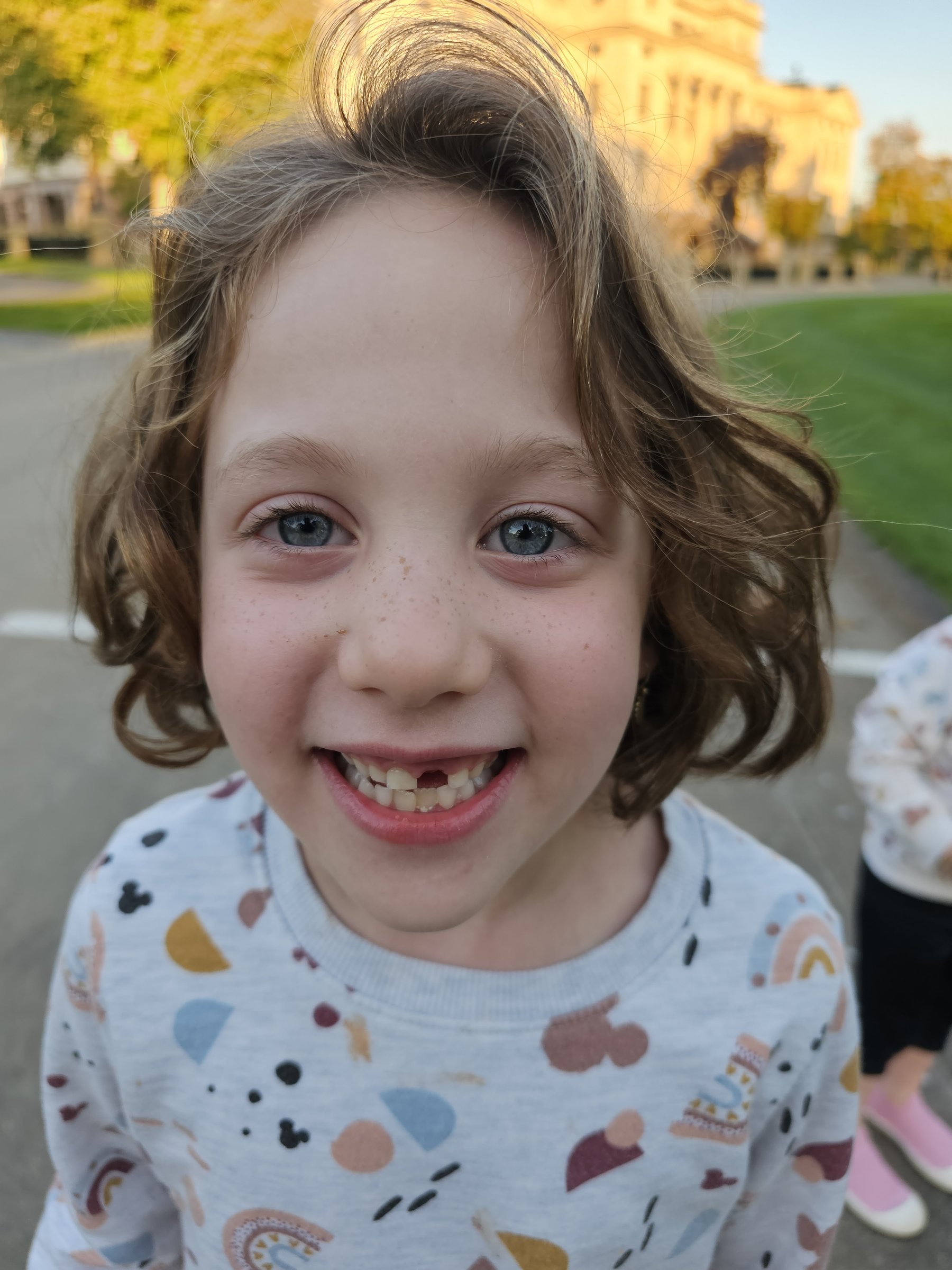
As we parked near the Capitol, Rachel announced that her tooth was extremely loose.
And right there, at the South Dakota State Capitol, Rachel lost her first tooth.
We went outside for our traditional Capitol photos, except this time her smile looked a little different from the one at Mount Rushmore.
The next morning we continued to Sioux Falls, where we stopped at Falls Park and watched the Big Sioux River pour over layers of pink quartzite in the middle of the city. After days of mountains, monuments, prairie, and Badlands, it felt like South Dakota still had one more landscape to show us.
Jewish South Dakota
South Dakota has one of the smallest Jewish populations in America, which made finding its Jewish story even more meaningful.
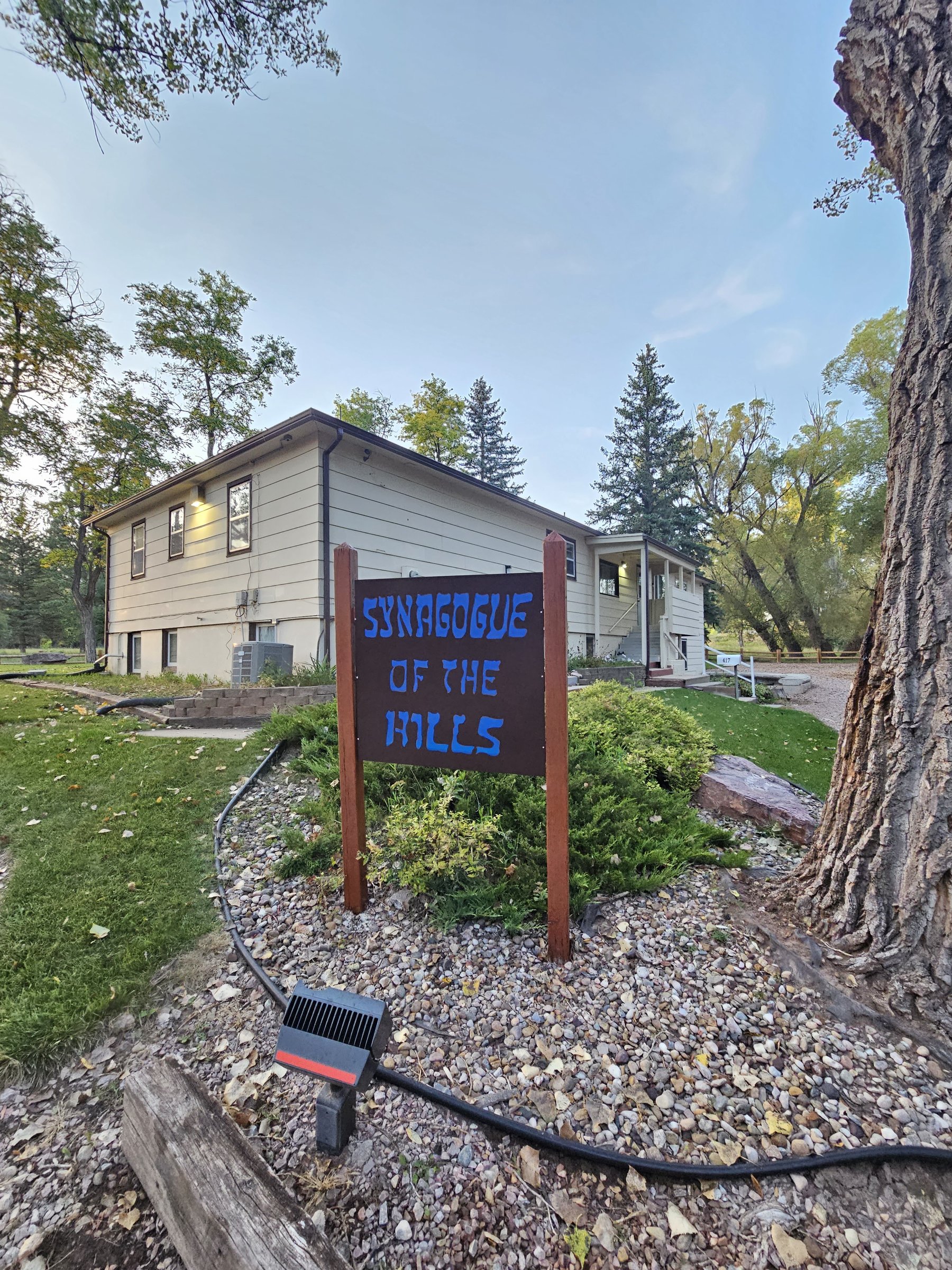
In Rapid City, we visited Synagogue of the Hills. It was such a cute little shul, sitting inside a high ranch style house that looked much like the homes around it. Yet inside was a Jewish house of worship serving one of the smallest Jewish communities in the country.
We happened to be there during Sukkos.
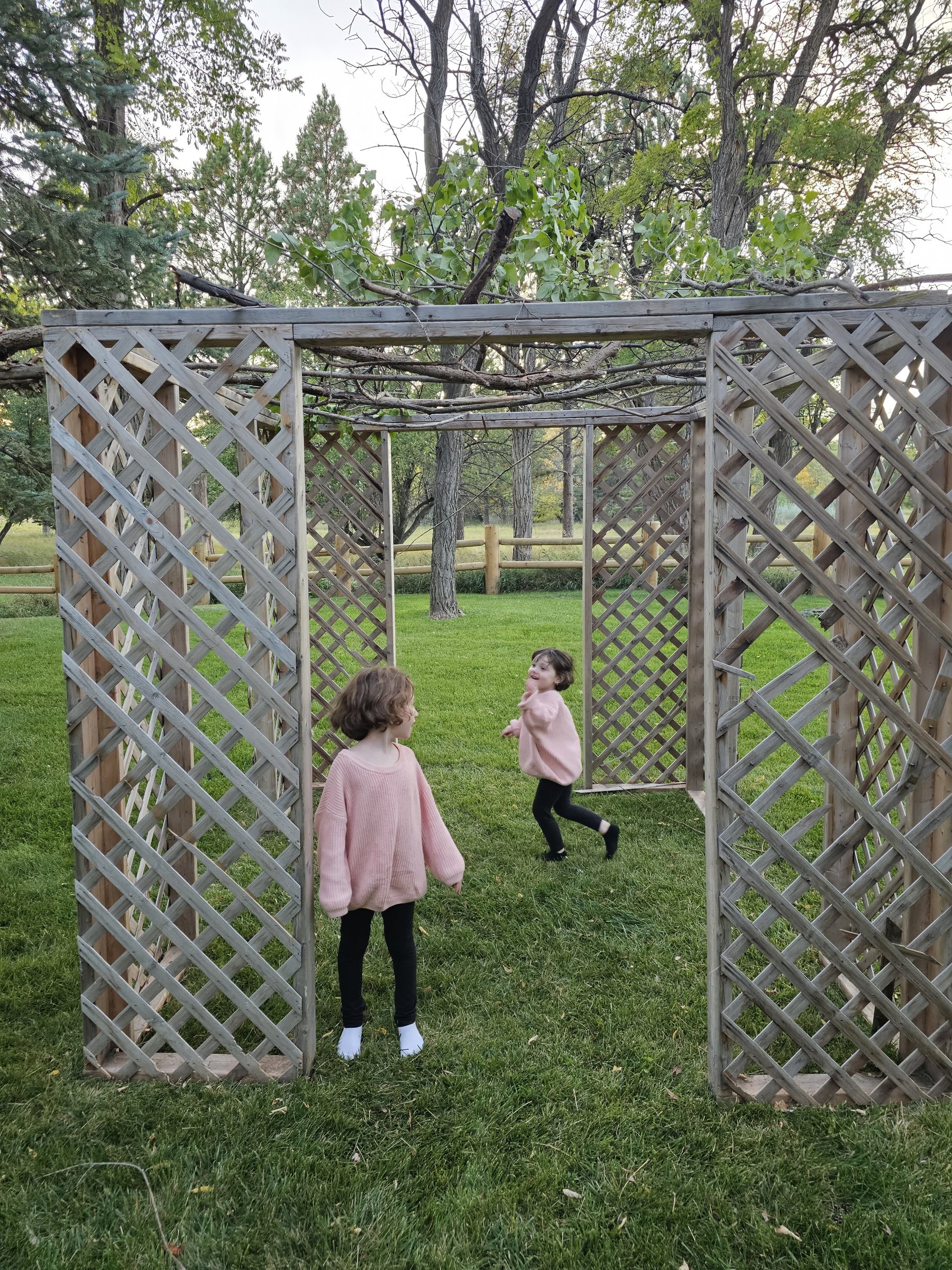
We stepped into their little sukkah, took the lulav and etrog, made the bracha, and performed the mitzvah of the day. Thousands of miles from home, in a little synagogue in the Black Hills, Jewish life continued exactly as it had for generations. That moment stayed with me.
Farther north, Aberdeen carries another piece of the story. Congregation B’nai Isaac was organized in 1917 and remains one of the oldest surviving Jewish congregations in the state. Generations of Jewish families prayed there while building lives on the northern plains.
Then there was Eureka and the story of Joseph Bender.
Bender came from the Jewish world of the Russian Empire and eventually built a life in small town South Dakota. He became a businessman, civic leader, school board member, alderman, and eventually mayor of Eureka. His family remembered that he closed his store for the Jewish holidays even when his family was among the only Jews around.
According to family history, his grandchildren later discovered some of the final municipal records he signed as mayor bearing his name in Yiddish letters.
That detail moved me.
A Jewish immigrant had crossed an ocean, built a life on the South Dakota prairie, served his neighbors as mayor, and left his Jewish name permanently inside the civic records of an American town.
From Jewish merchants in Deadwood, to B’nai Isaac in Aberdeen, to a little sukkah in Rapid City, Jewish South Dakota may be tiny in numbers. But it is part of the fabric of the state.
What Stayed With Me
What stayed with me about South Dakota was how many different versions of America seemed carved into the same land.
Presidents on one mountain. Crazy Horse on another. Native history, pioneers, Jewish settlers, bison, prairie, and little communities trying to preserve their stories.
Then there was that hug at Mount Rushmore.
Two men from very different worlds, standing beneath four presidents, discovering that perhaps we were not so different after all. South Dakota reminded me that history is complicated. Belonging is not.
Have a story, an idea, or a reason to connect?
For editorial inquiries, media, speaking, collaborations, historical research, or simply a story you think I should know I'd be glad to hear from you.
Contact Dov