North Dakota
Where the idea of America plays out.
Fargo · Bismarck · Grand Forks · Medora · Jamestown · Ashley
The Journey
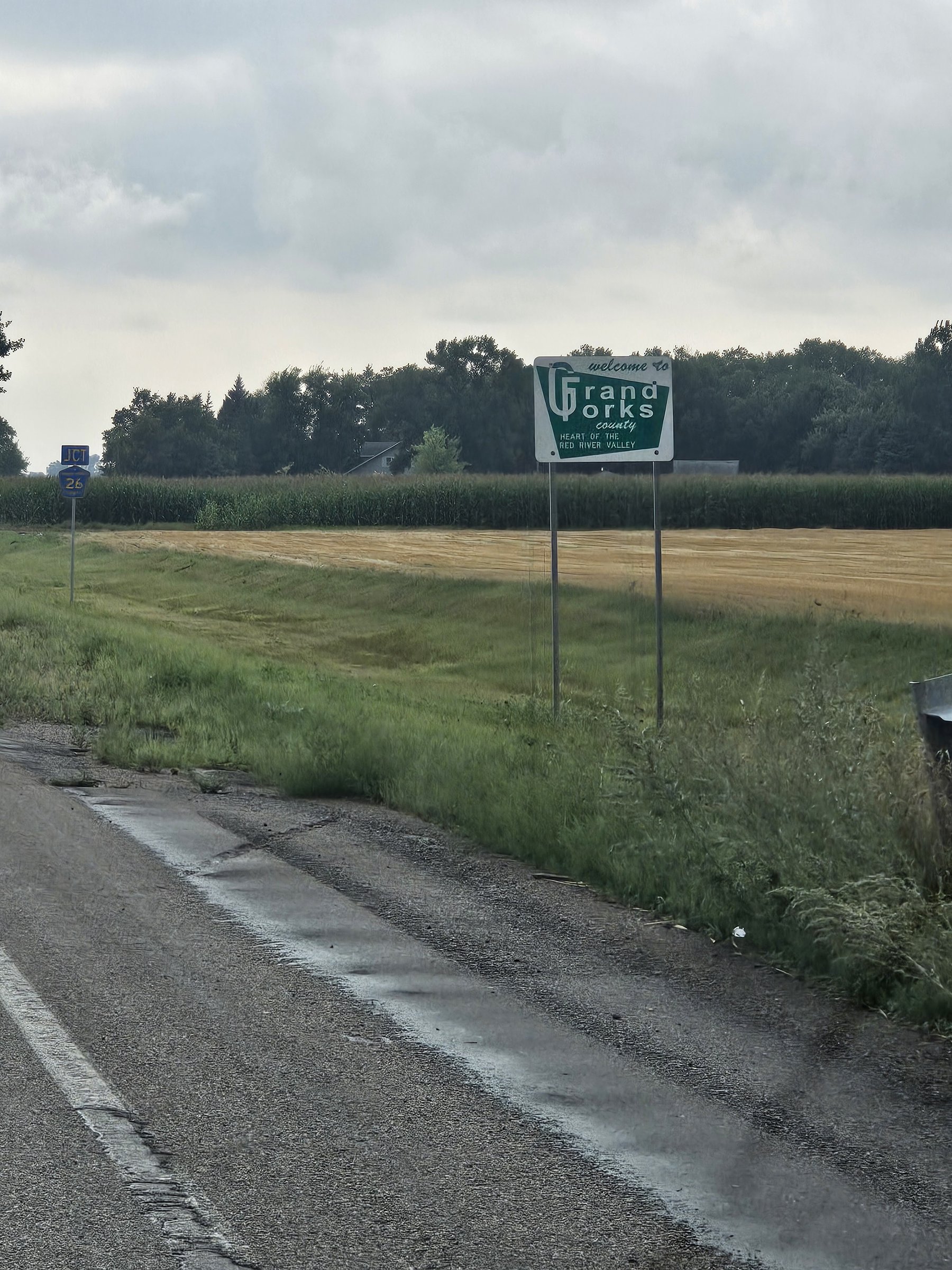
Our trip through North Dakota began in Grand Forks. We had few expectations, but what we came to know was a state full of life and surprises.
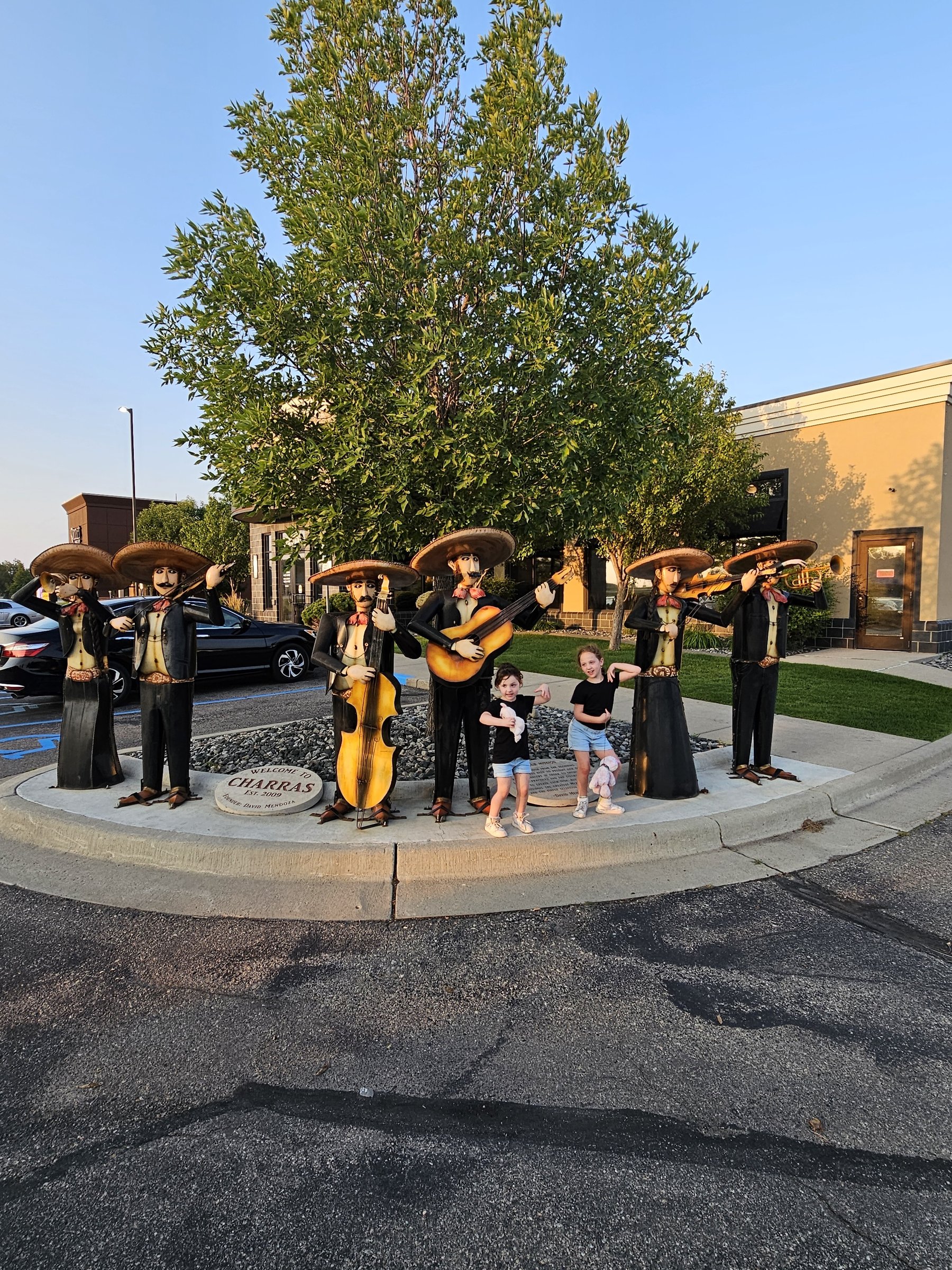
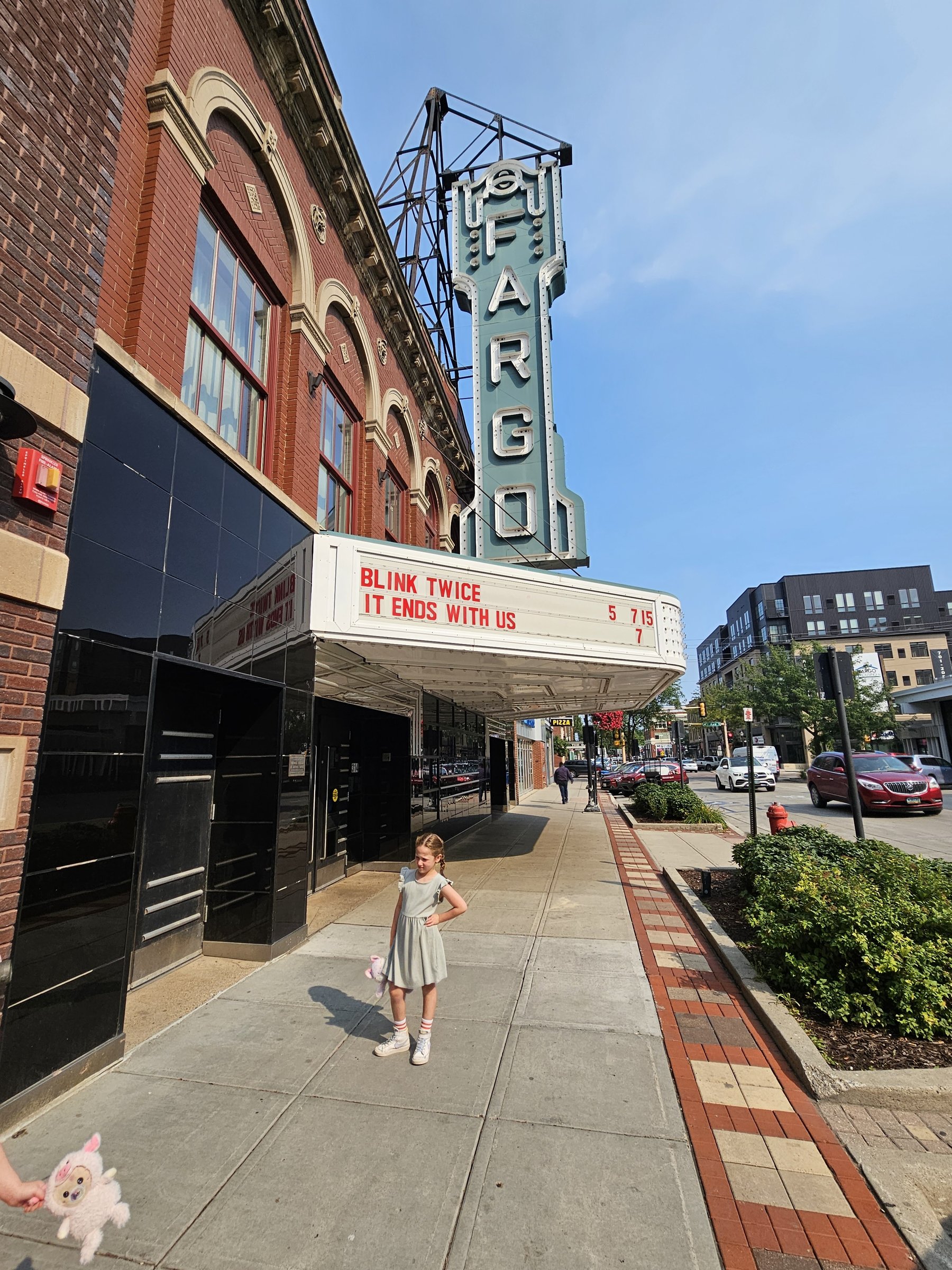
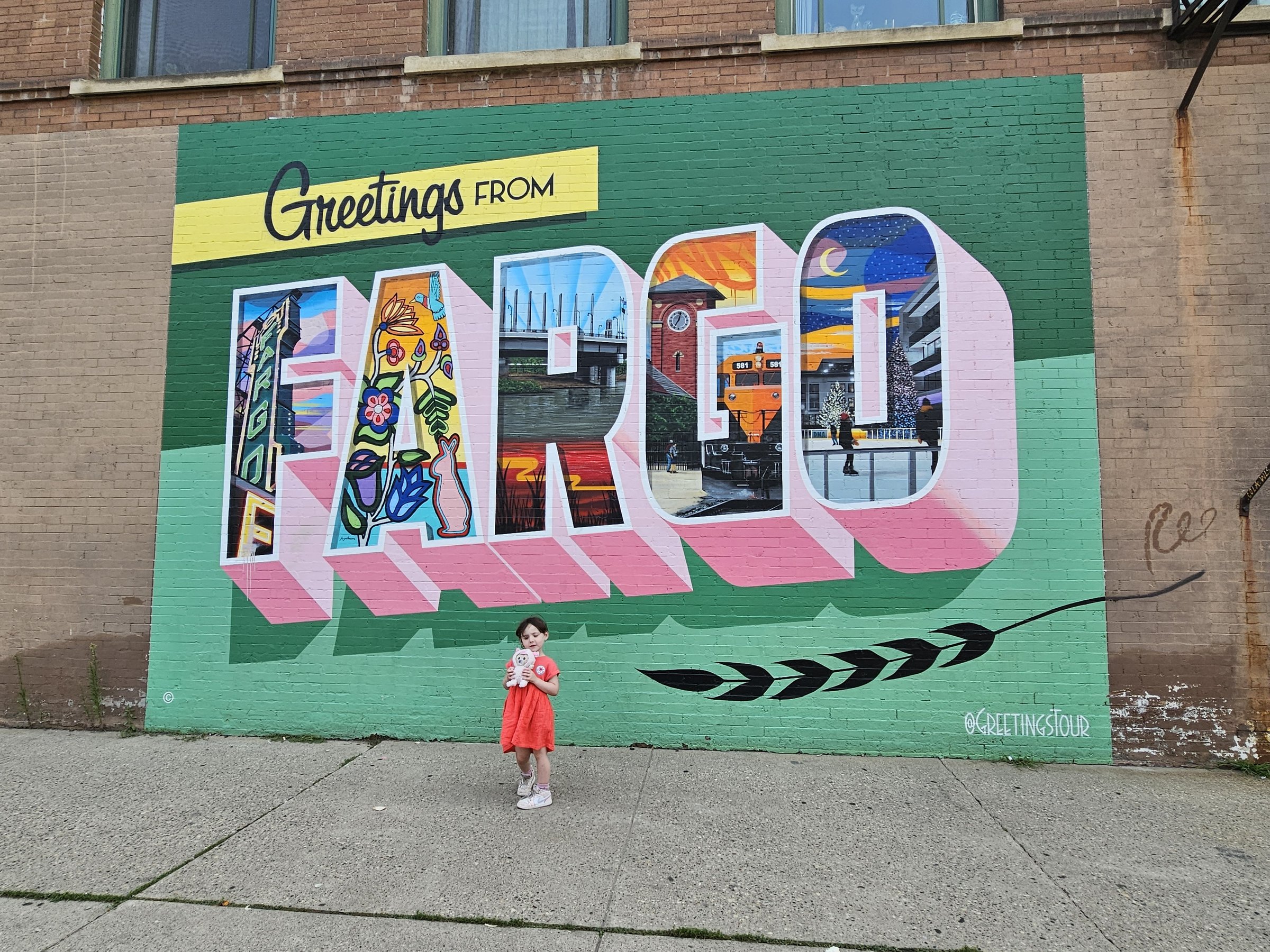
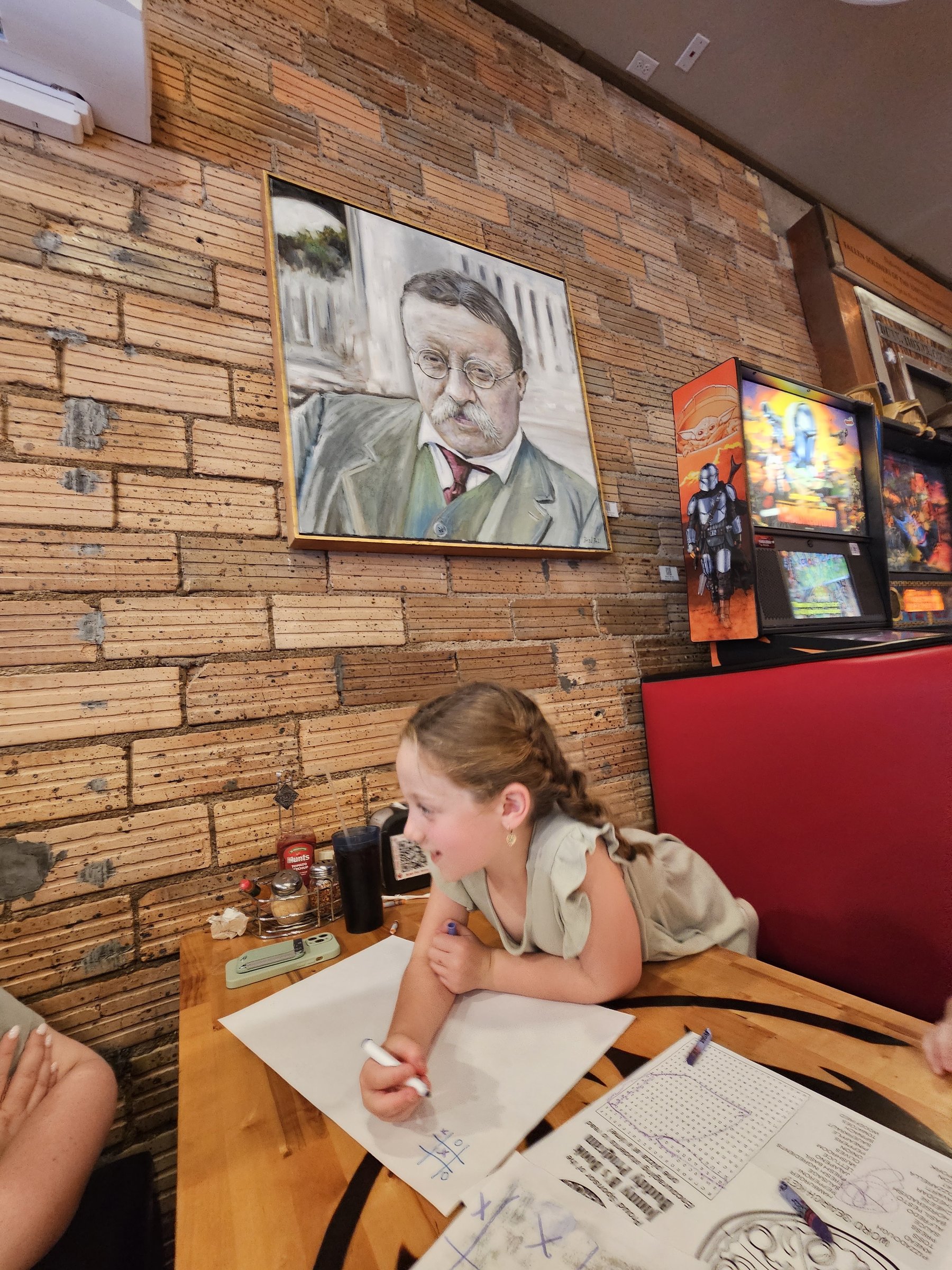
We headed to Fargo, the largest city in North Dakota, yet it somehow felt more like a charming upstate New York town. The people were kind, the streets were lively, and little retail shops gave the city character. One morning, we sat in a local café with coffee and hot chocolate playing a game of rummy, only for the girls to become completely distracted by one of the cutest dogs in the state.
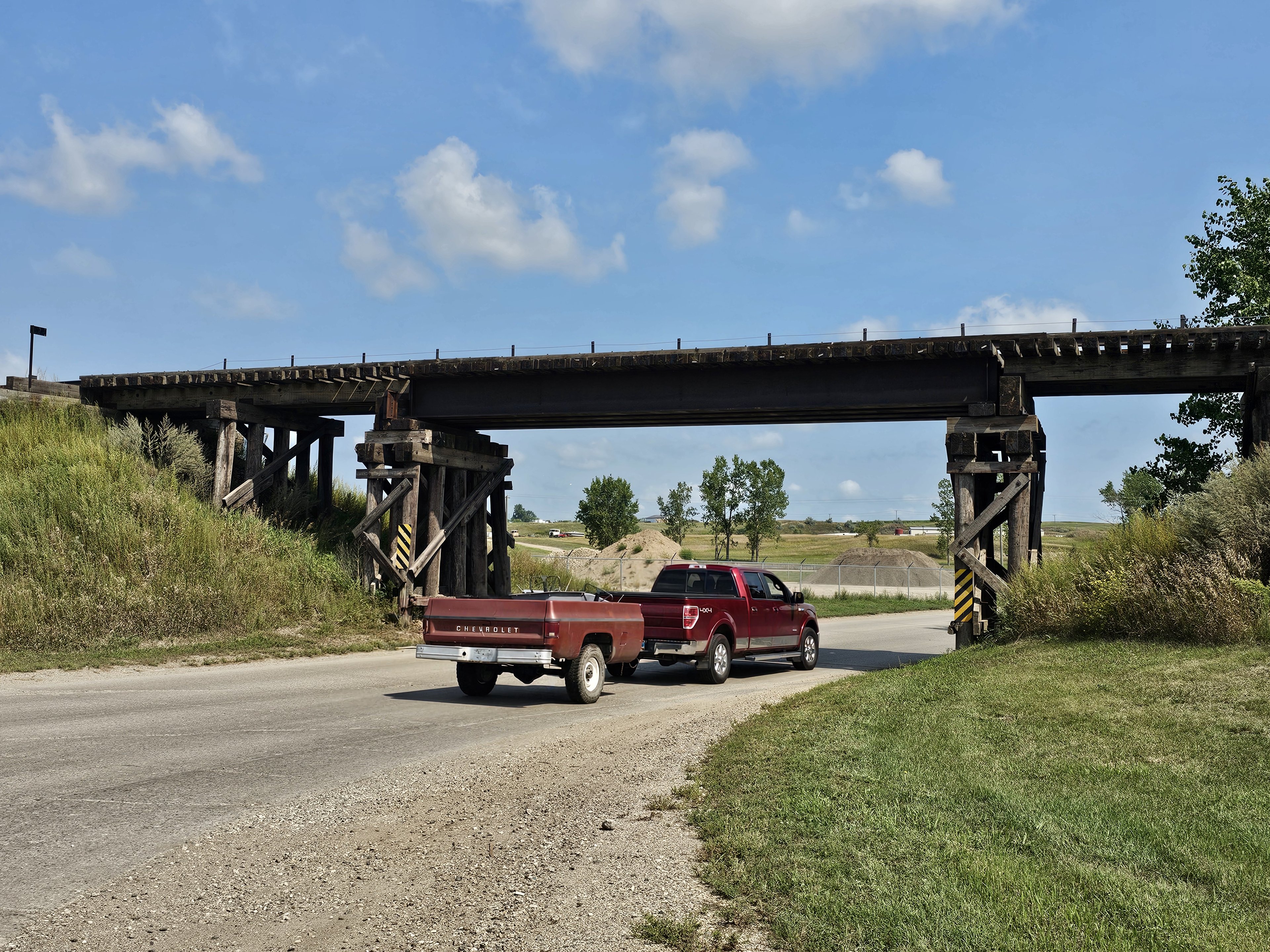
Making our way west, the roads stretched through enormous fields, little towns appeared every so often, and the horizon seemed almost completely uninterrupted. There were moments when it felt like we had the road, the prairie, and the sky entirely to ourselves.
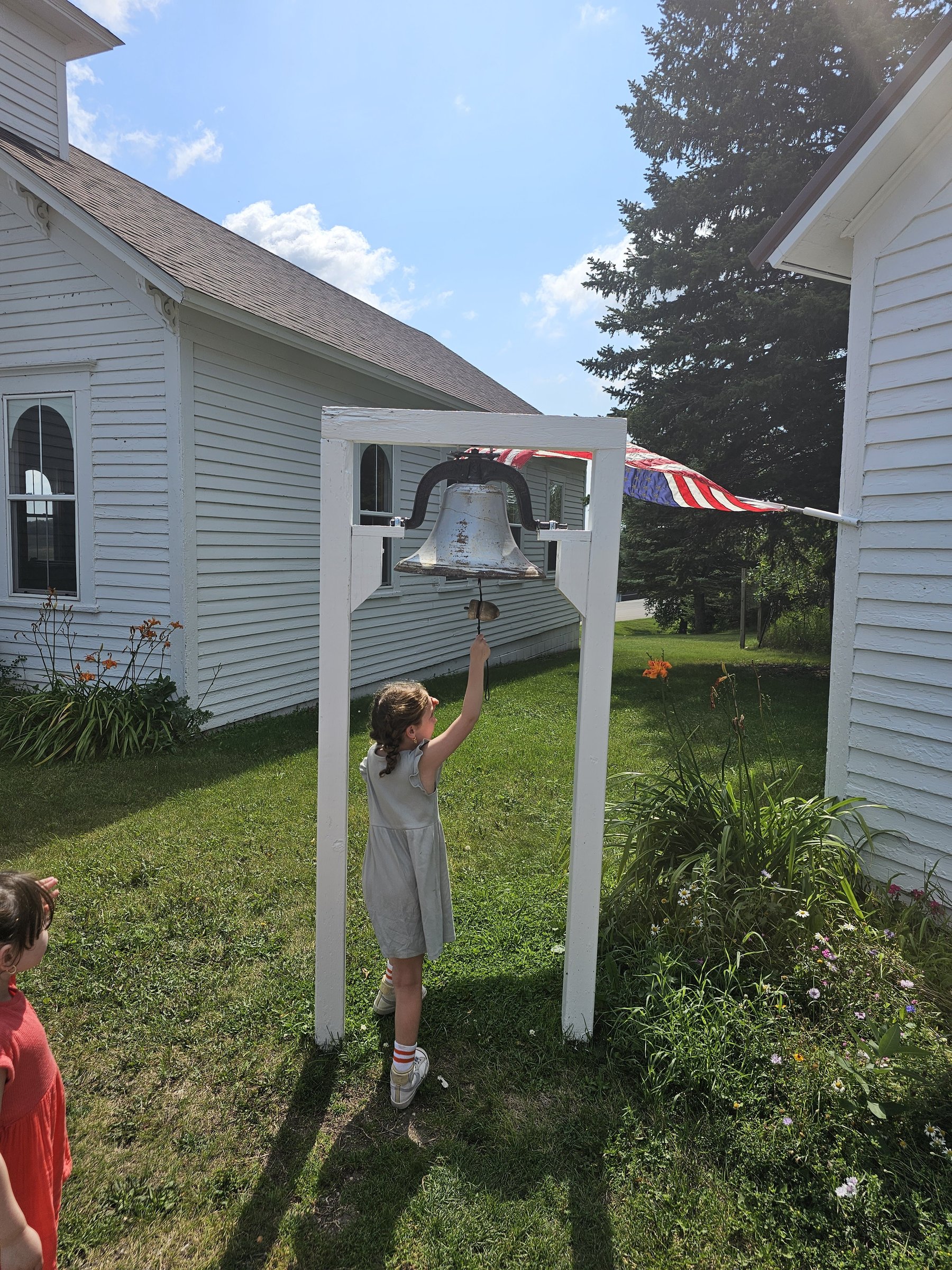
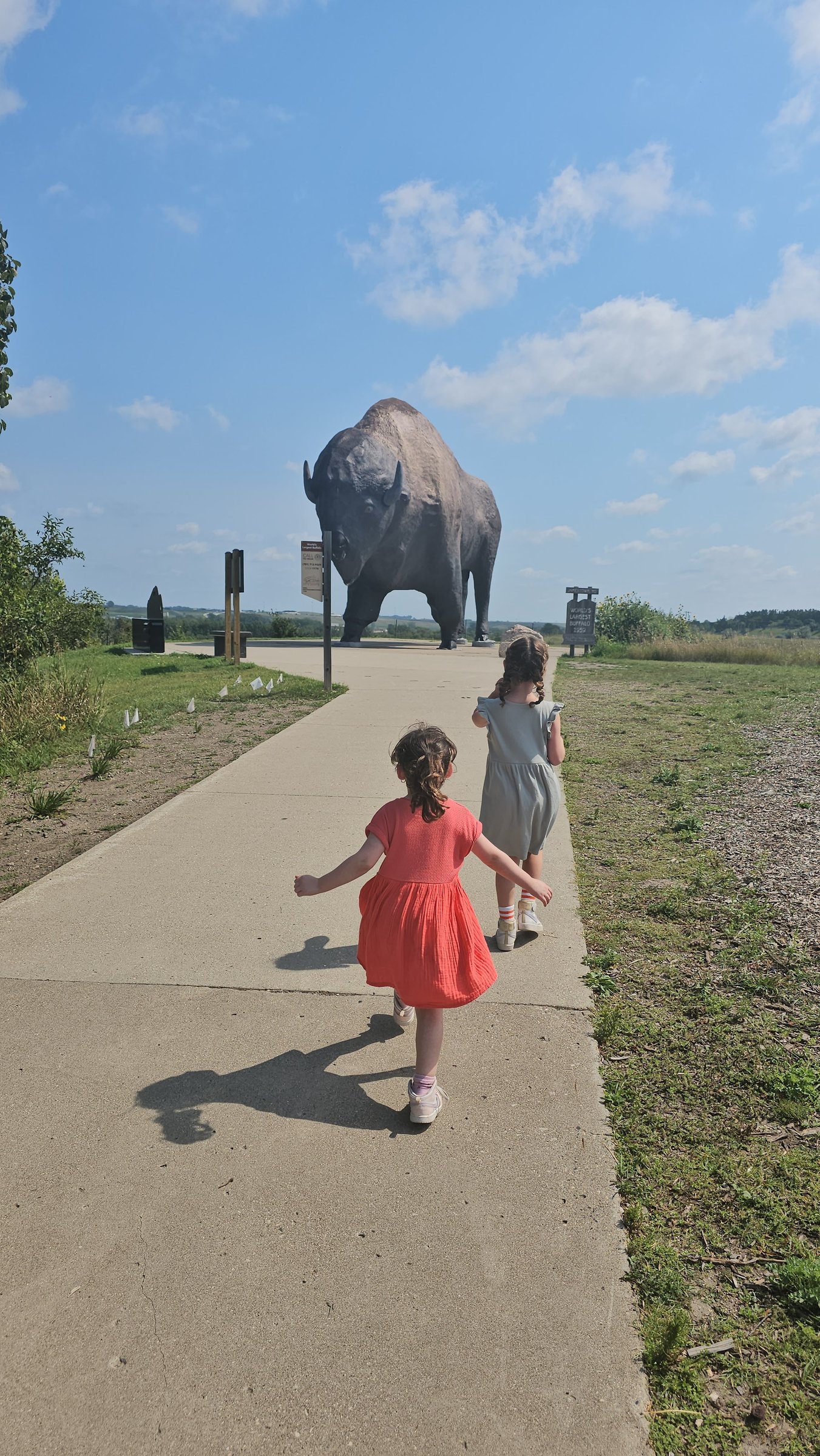
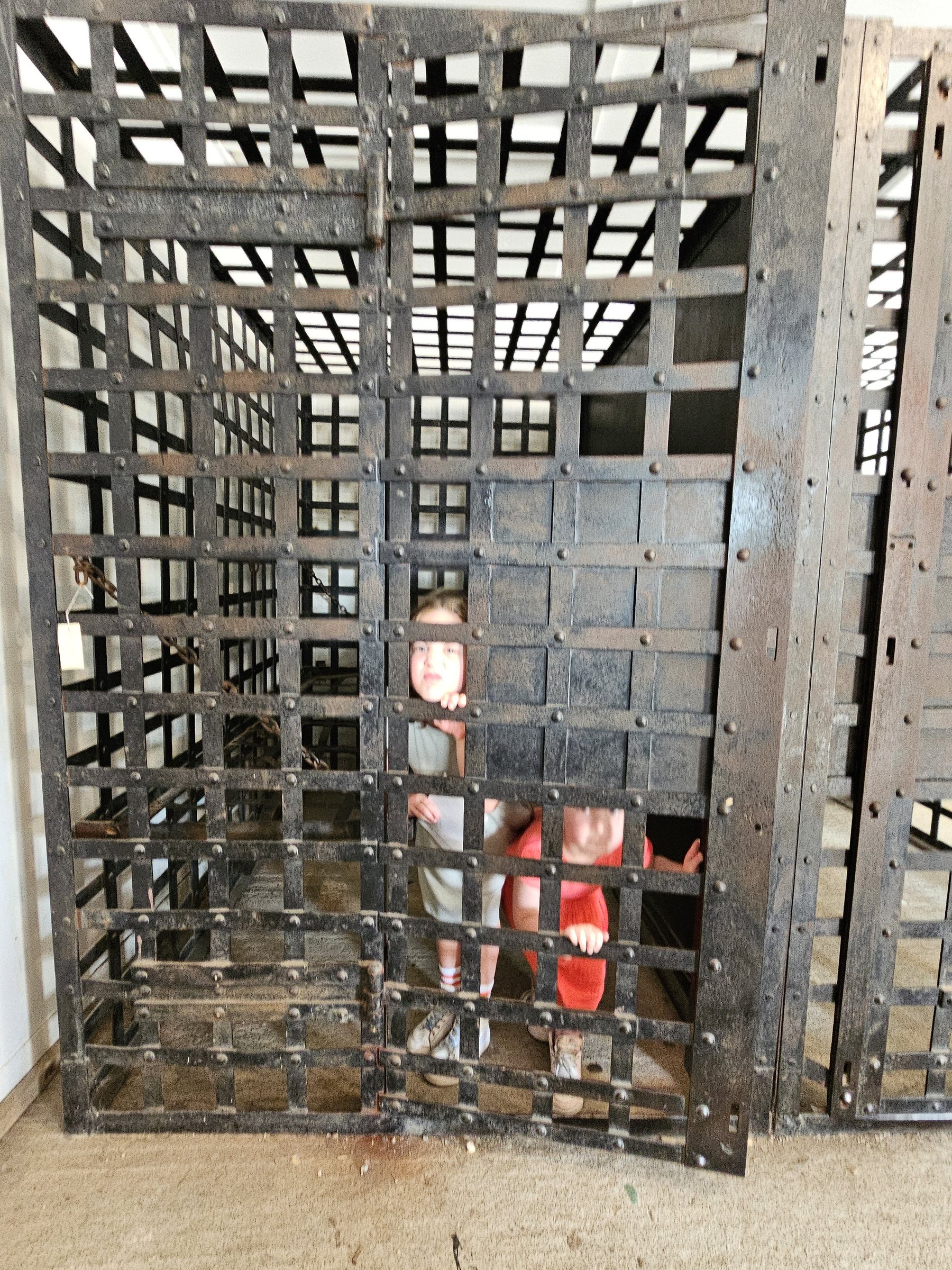
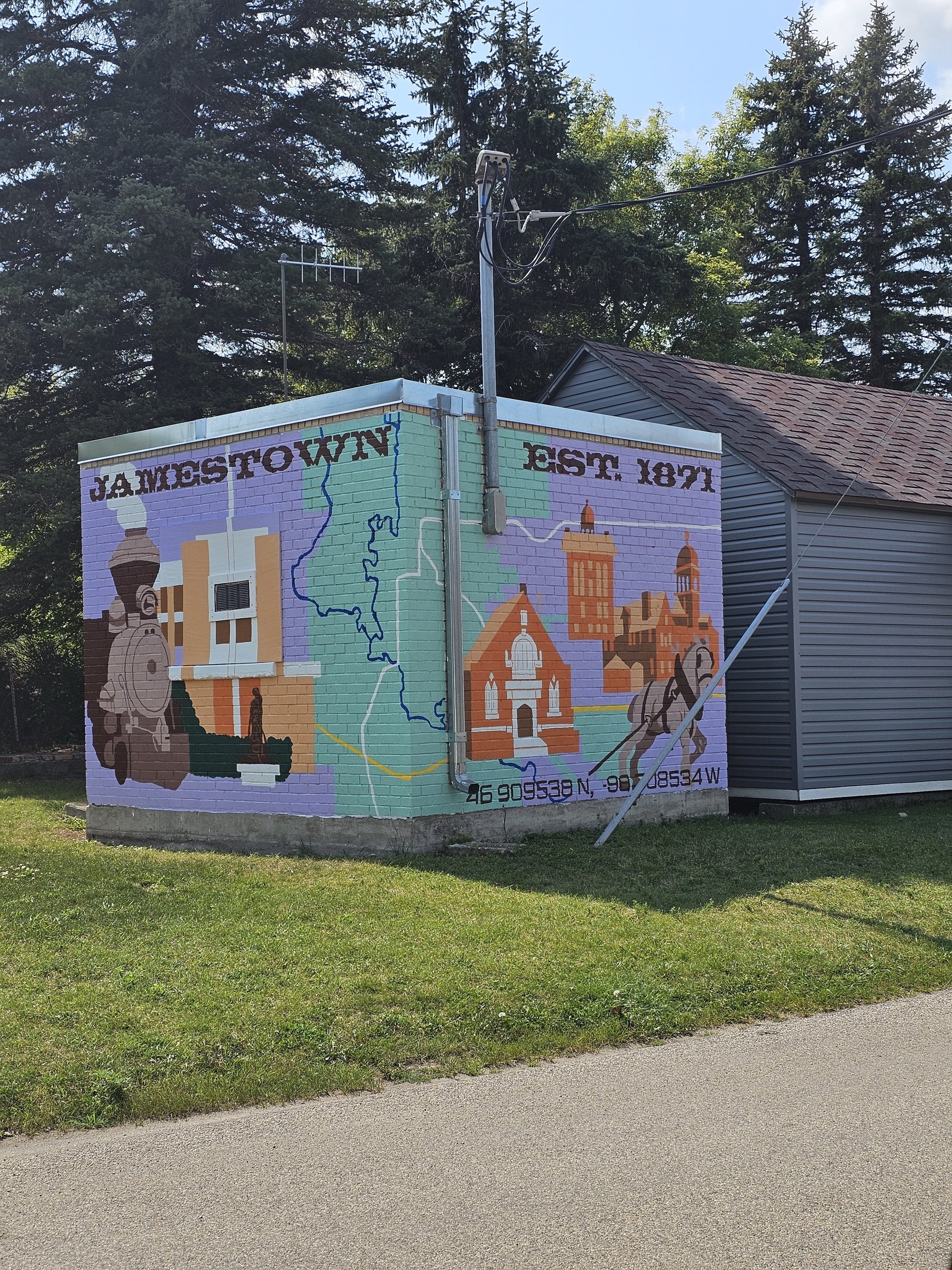
In Jamestown, we met Dakota Thunder, the world’s largest buffalo monument. At the North American Bison Discovery Center, the girls learned about one of our favorite American animals and saw bison roaming nearby. We also wandered through Frontier Village, with its old school, shops, church, and other buildings from prairie life. The girls even found the old jail and locked me up for a bit, perhaps well deserved.
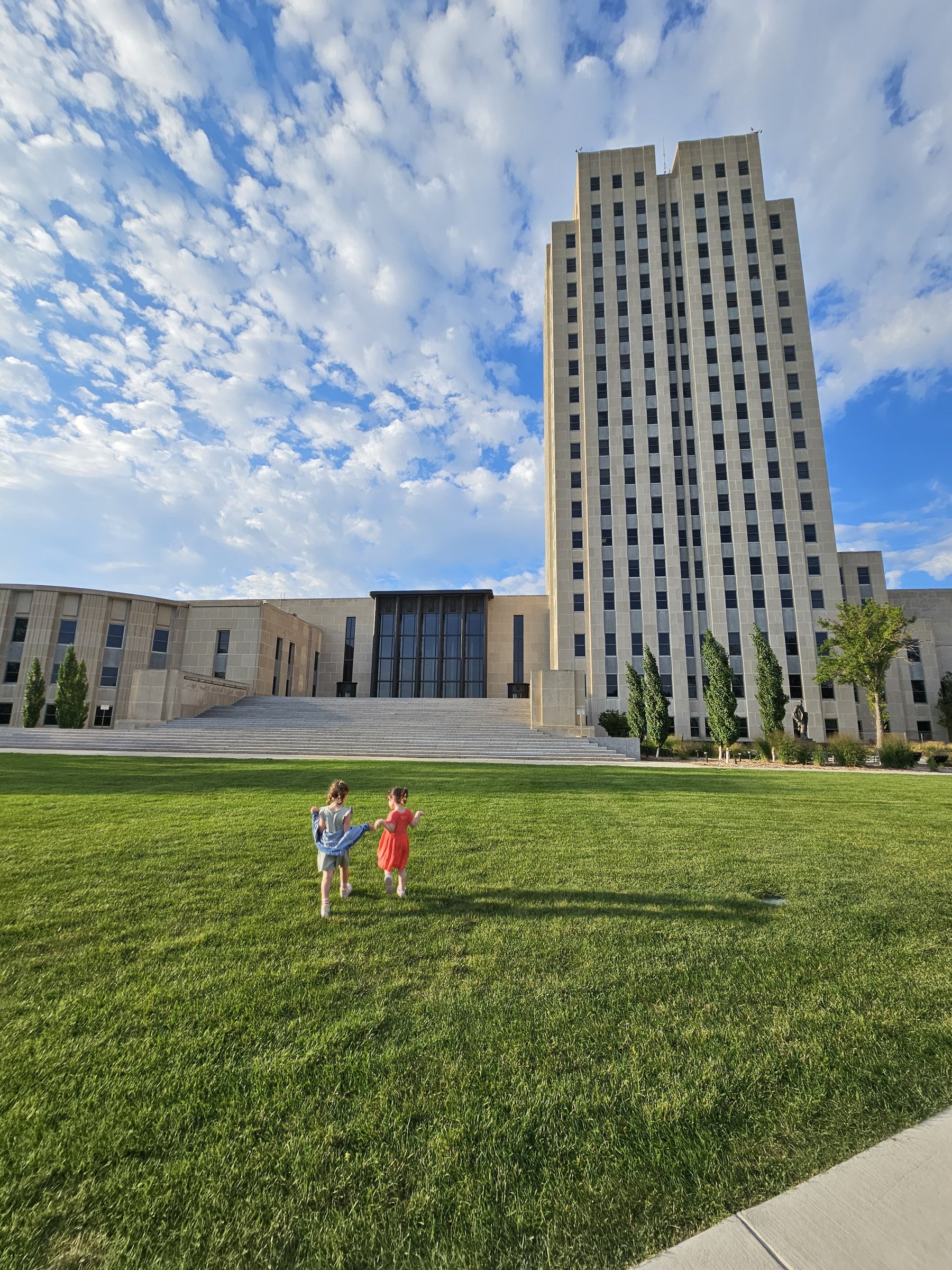
Later, in Bismarck, we visited the State Capitol, continuing our journey through every capital in America. North Dakota’s Capitol looks nothing like the traditional domed buildings we had become used to. Its tall Art Deco tower rises almost unexpectedly from the prairie.
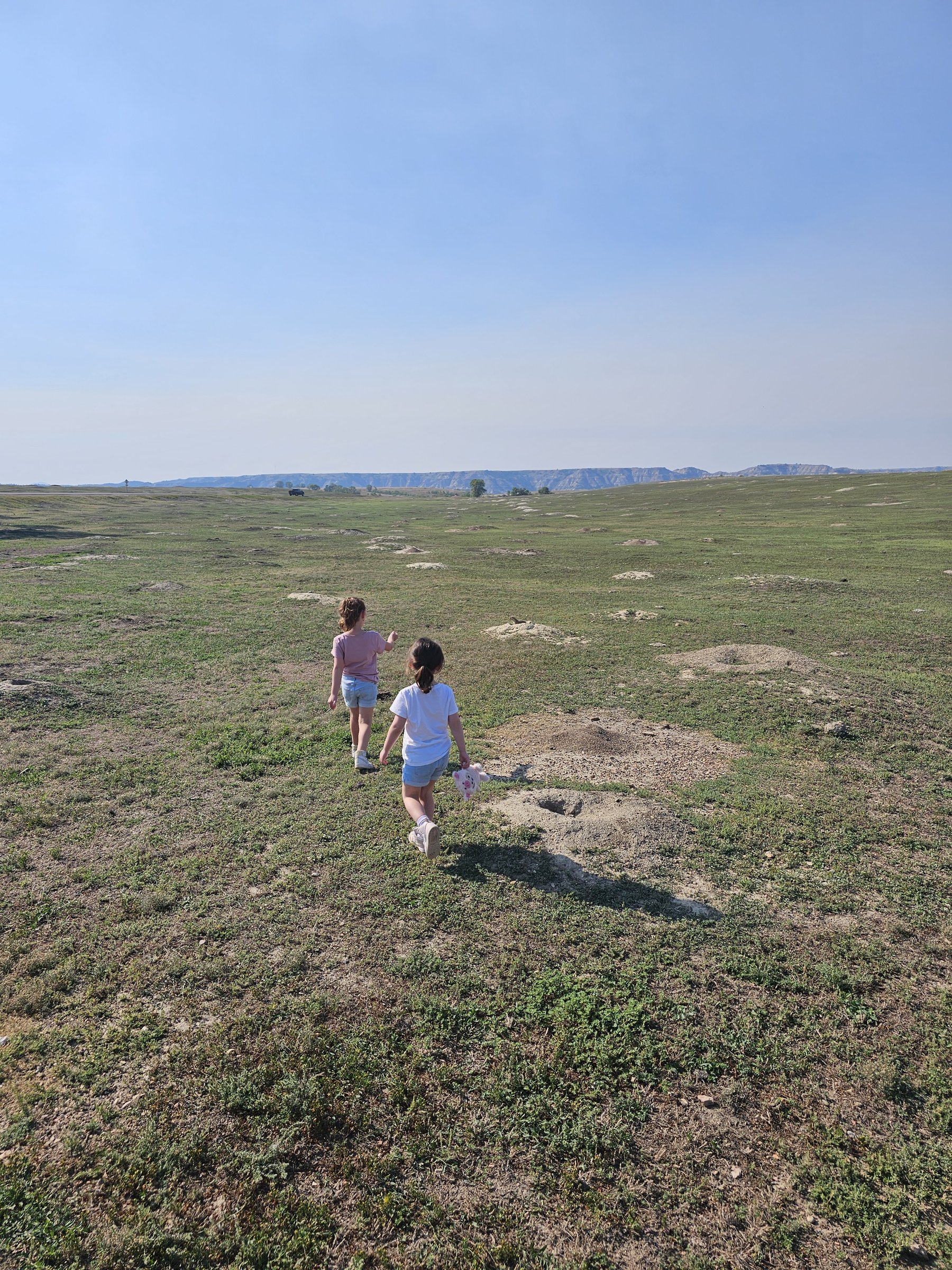
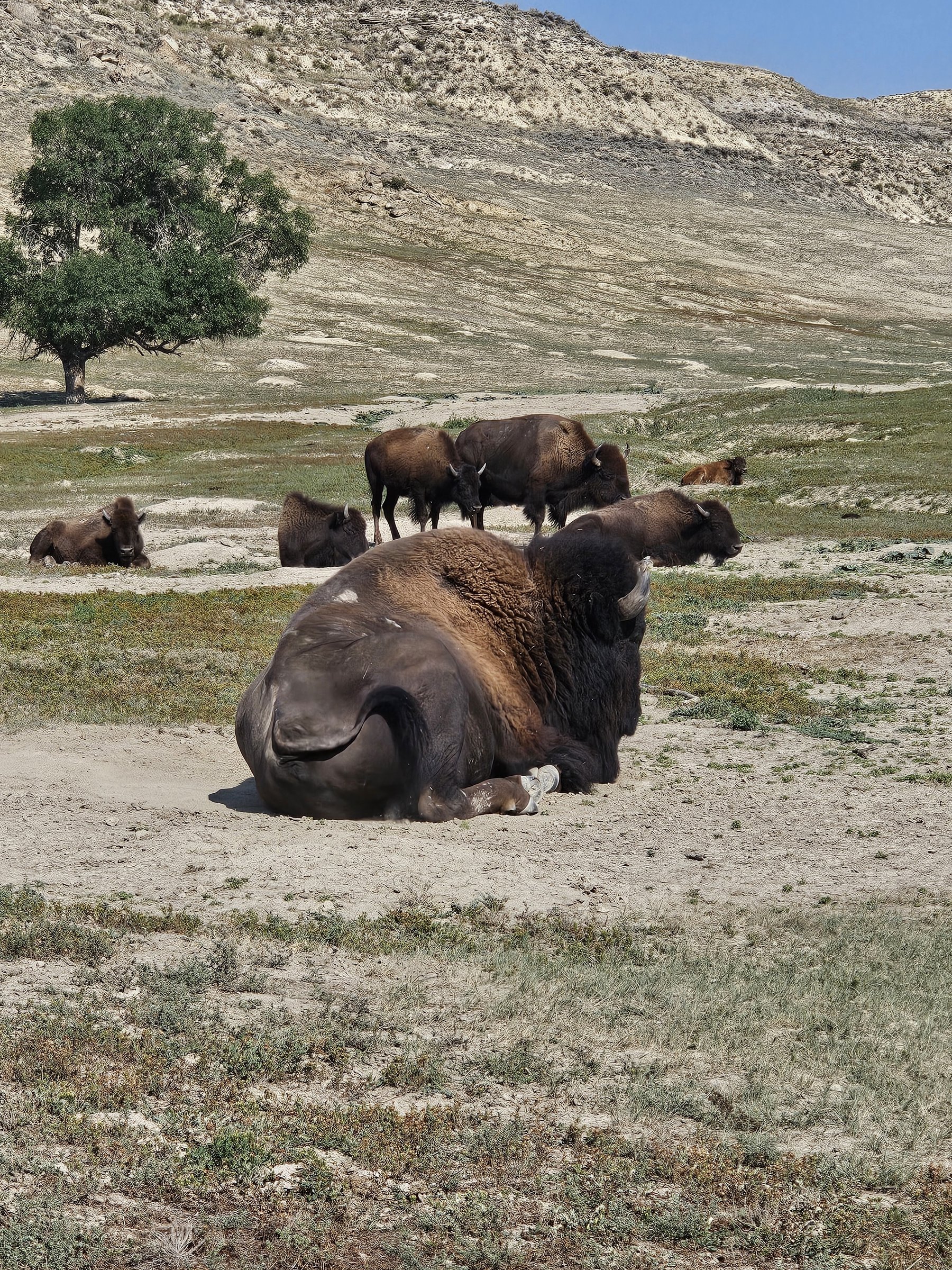
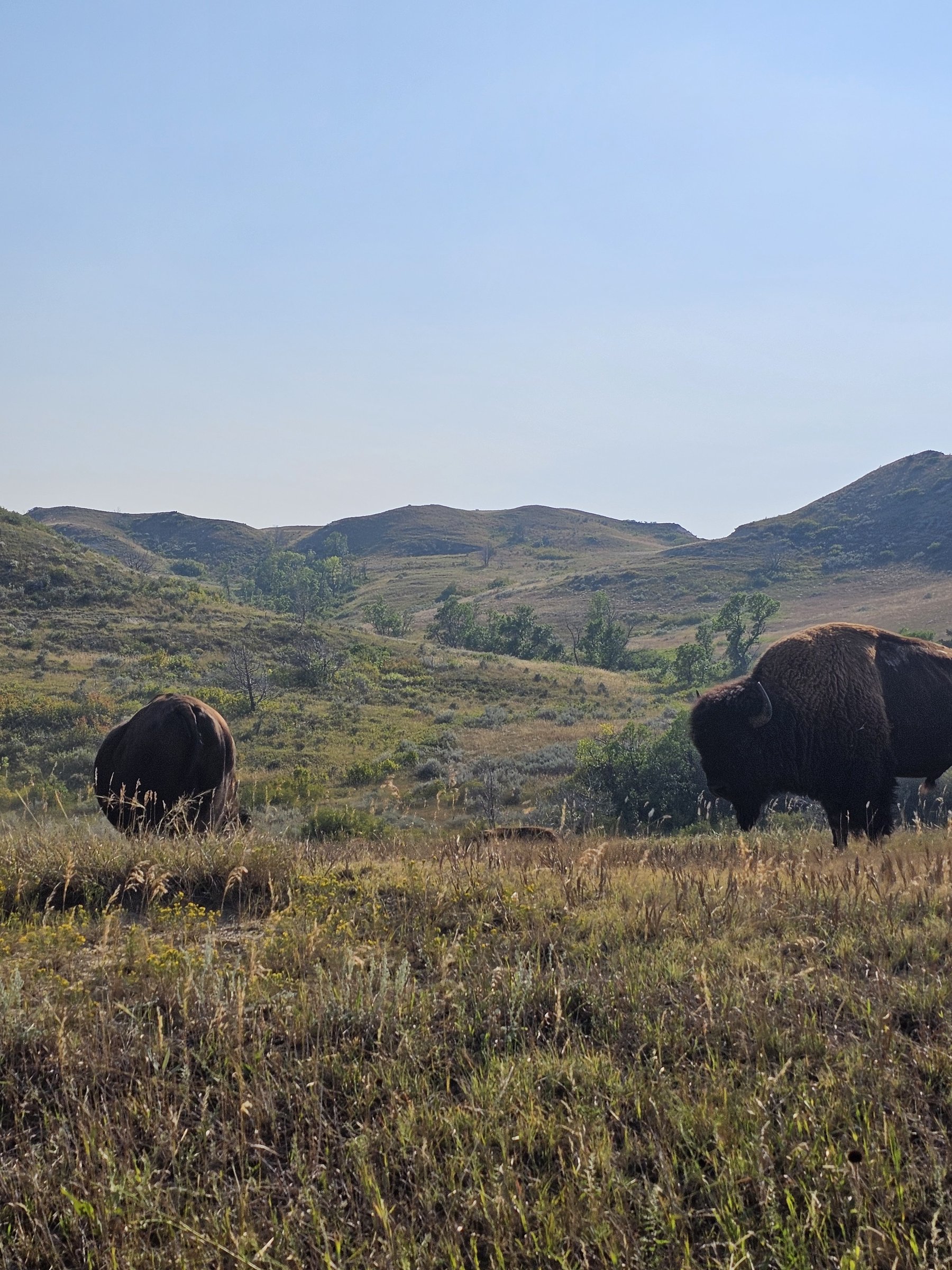
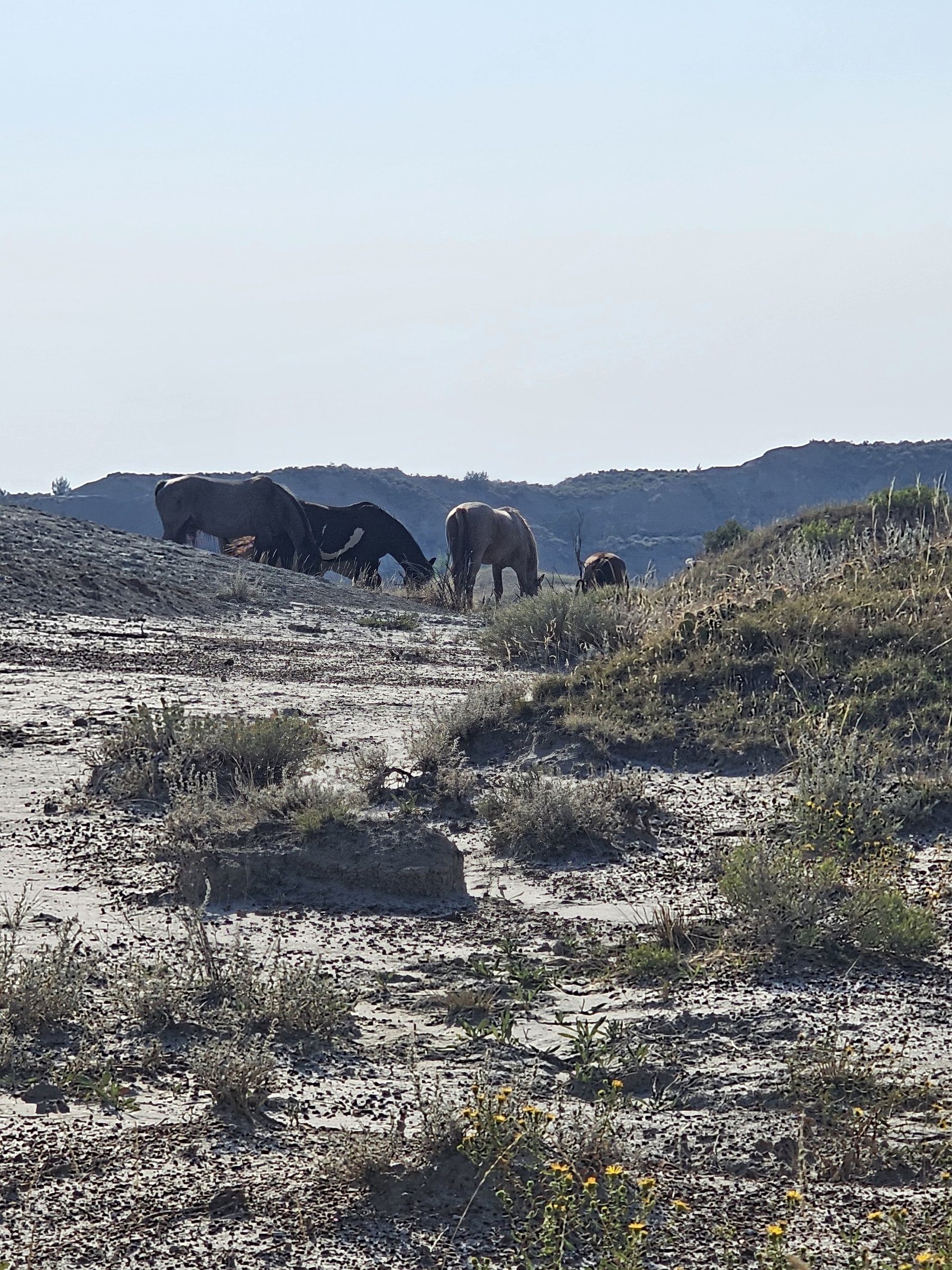
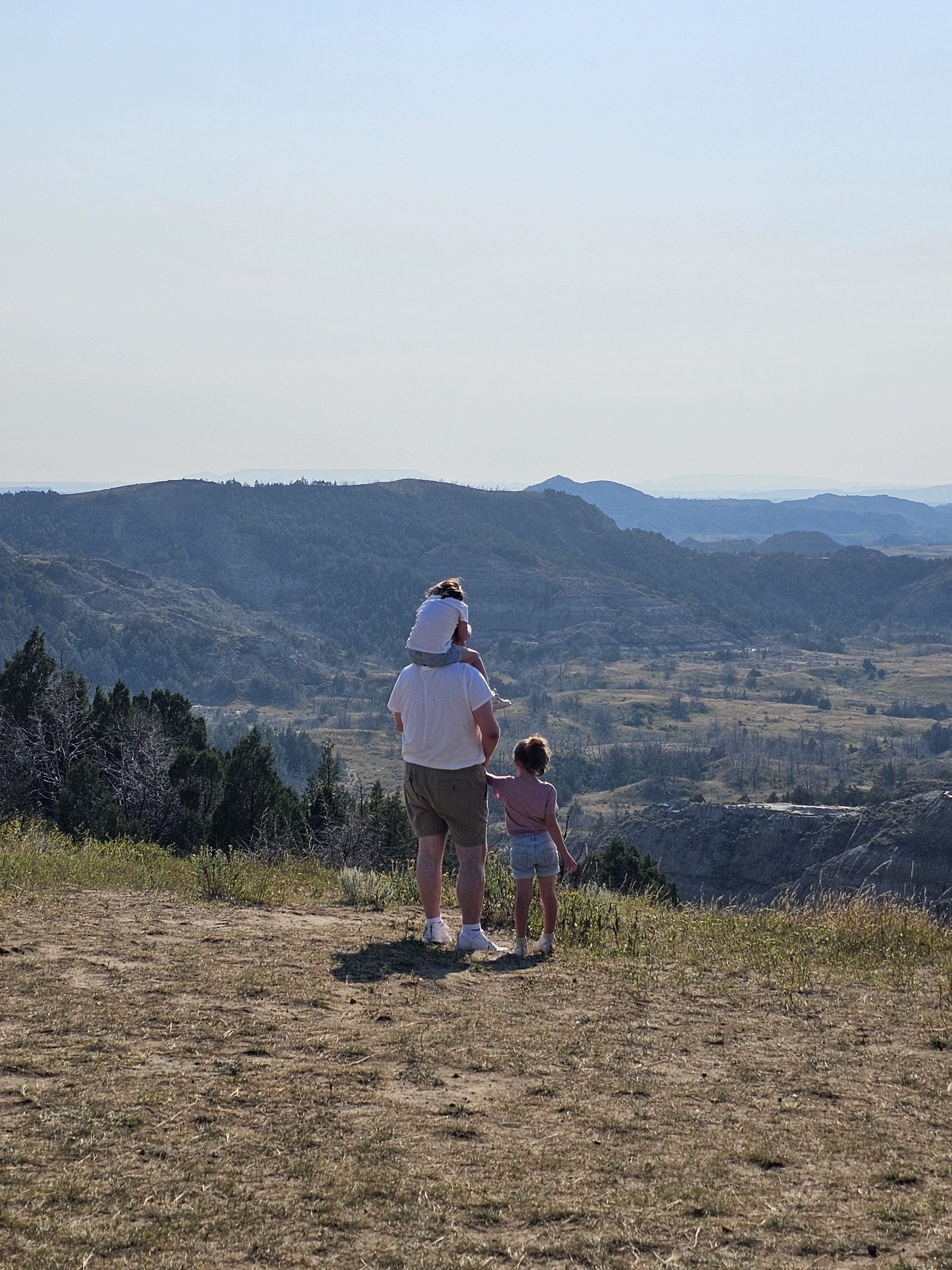
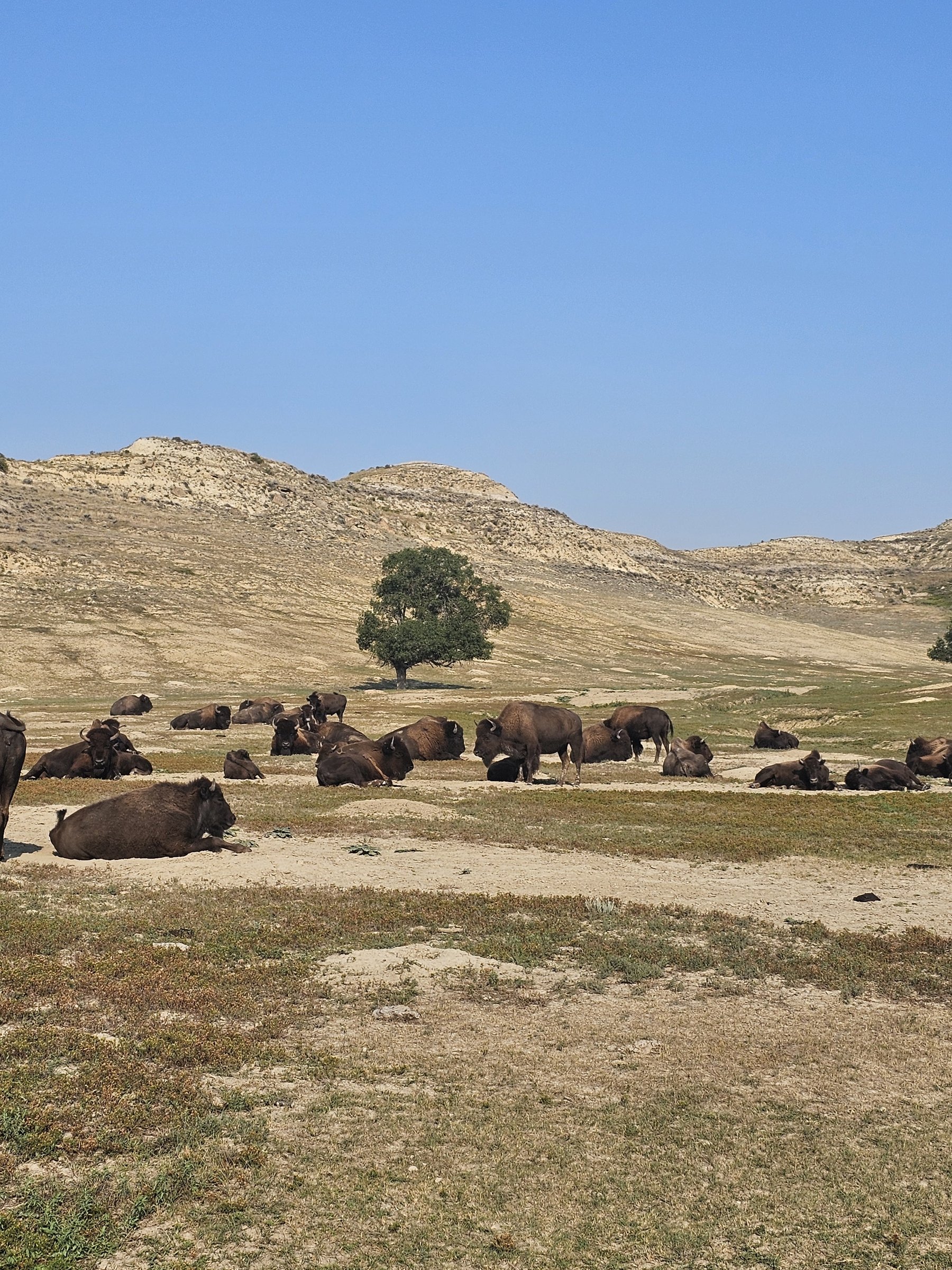
From there, we headed into Theodore Roosevelt National Park. The views were magnificent, large herds of bison wandered through the landscape, coyotes appeared in the distance, and the girls especially loved the huge prairie dog towns, where little heads kept popping out of the ground to inspect us.
Then there was Medora, a tiny Western town surrounded by the rugged Badlands.
One of my favorite memories there had very little to do with an attraction. I was standing in my kippah when we met a family in cowboy hats, with the father openly carrying a firearm. He looked at me and simply asked, “Hey, pal, where you from?”
Within minutes, our families were talking. The children started playing together, we shared stories about our lives, and two families who might have looked completely different from across the street became simply two American families enjoying an afternoon together.
We talked for nearly an hour, until suddenly realizing we were almost late for the show.
And what a show it was.
It felt like Broadway had been brought into the North Dakota Badlands. We joined in the music, patriotism, and hope. One of the moments I will never forget was watching horses and riders carrying enormous American flags against the cliffs as the sun went down.
That day North Dakota became very American for me. Open land, open roads, patriotic moments, and people who were open too.
Jewish North Dakota
Jewish North Dakota required us to look a little harder, and that made finding it even more meaningful.
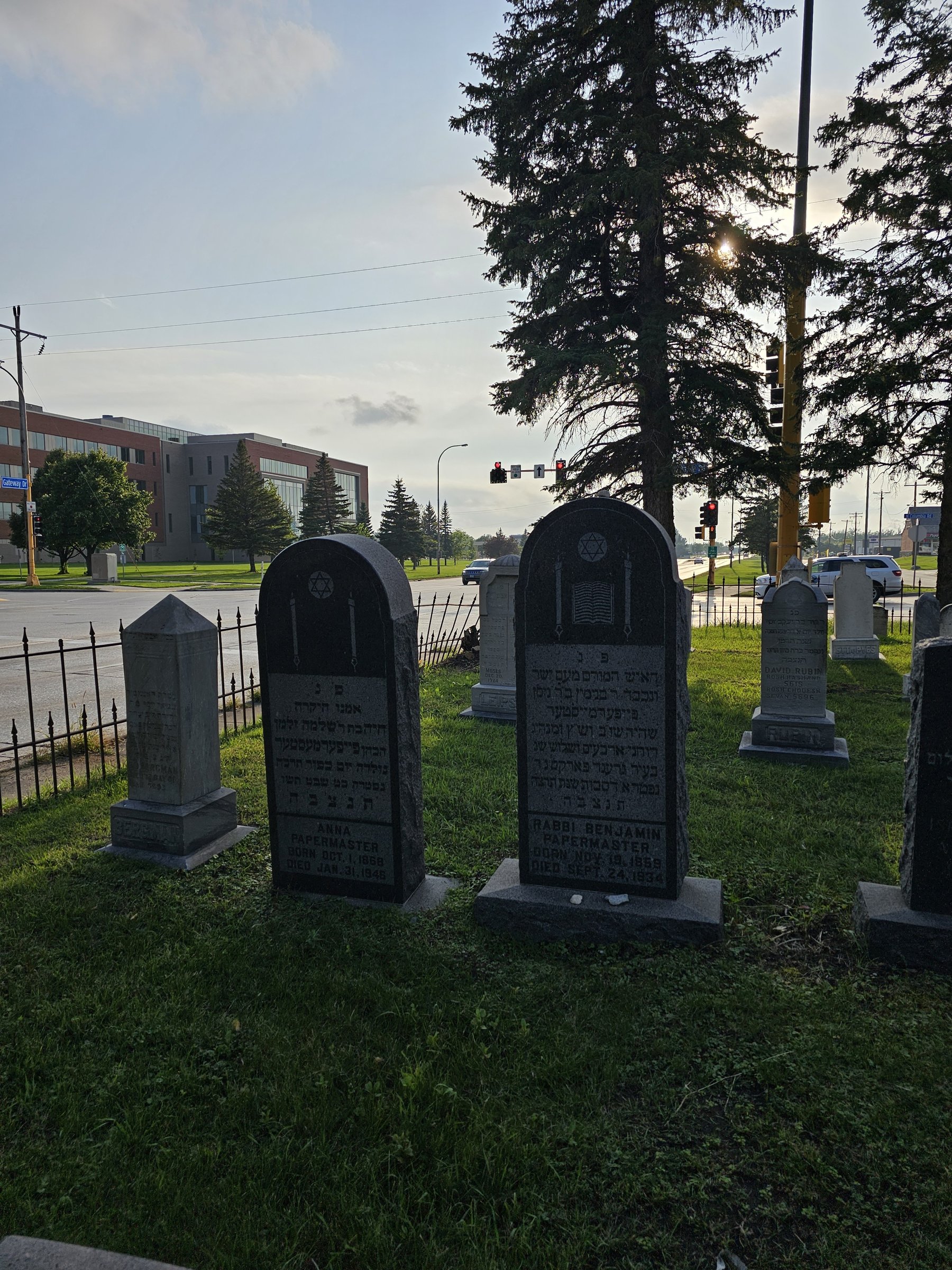
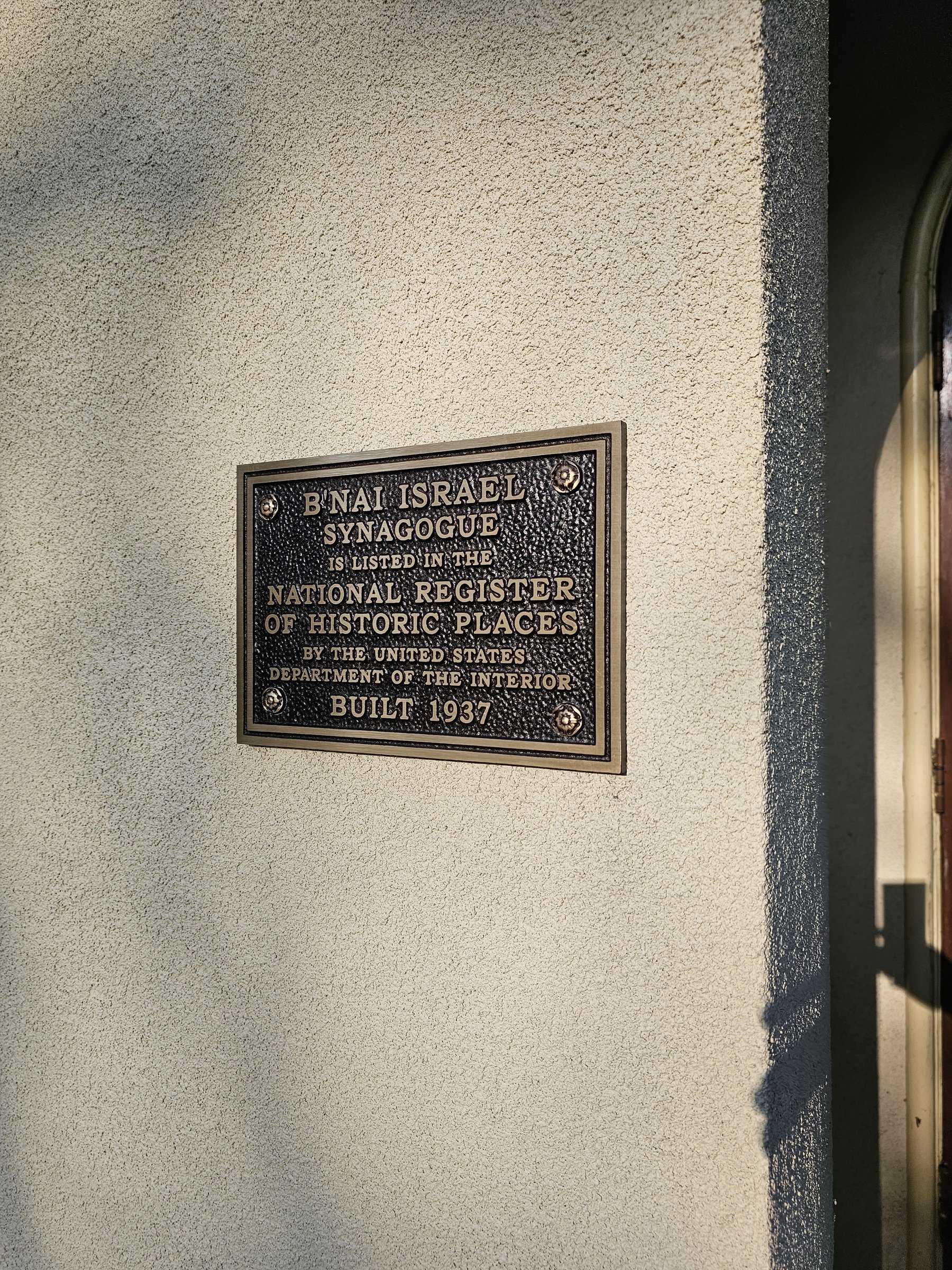
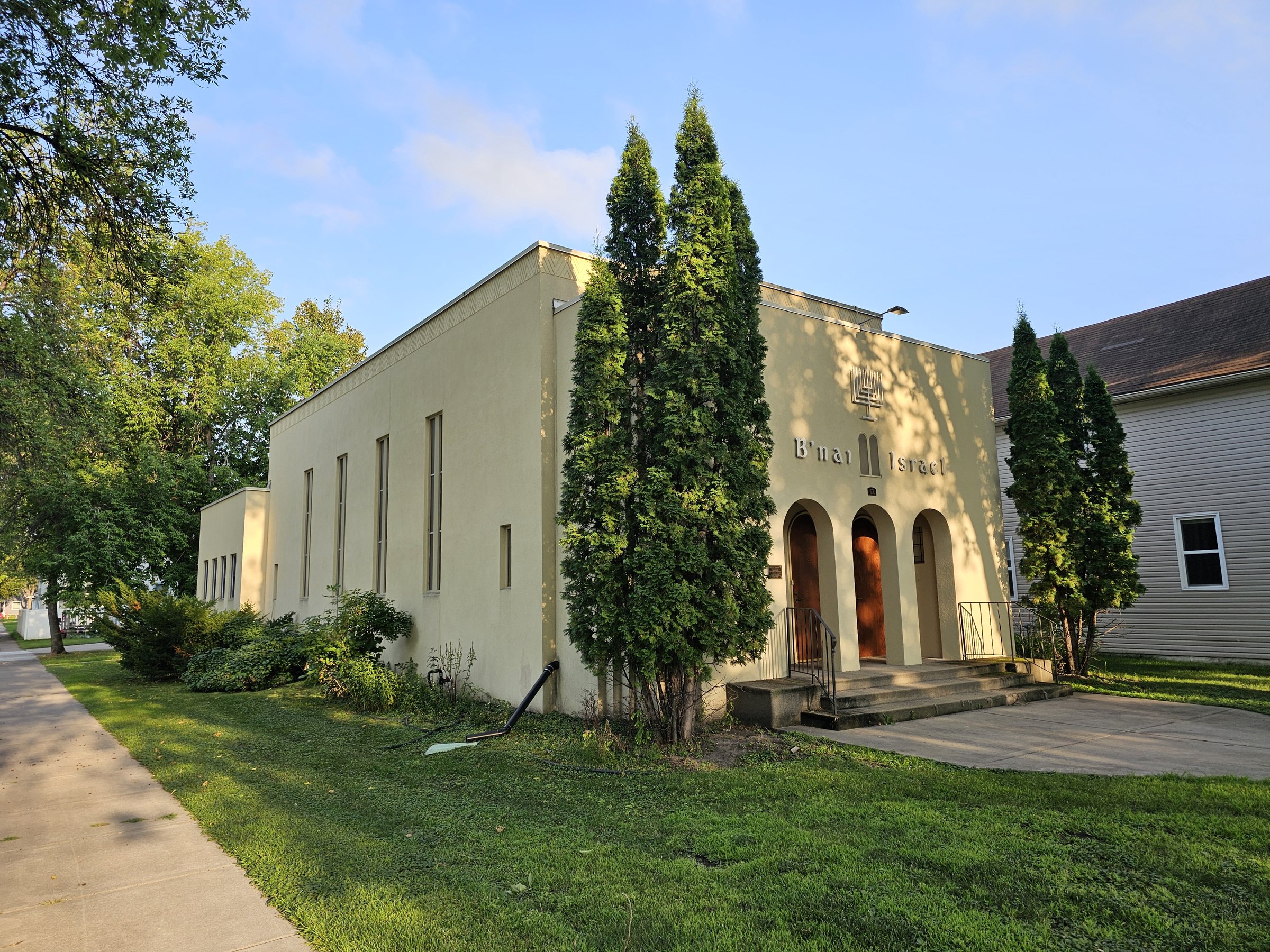
In Grand Forks, we visited B’nai Israel, home to North Dakota’s oldest urban Jewish community, established in 1891. We also visited the grave of Rabbi Benjamin Papermaster, who arrived that same year and spent decades traveling across the state helping isolated Jewish families maintain their faith and community.
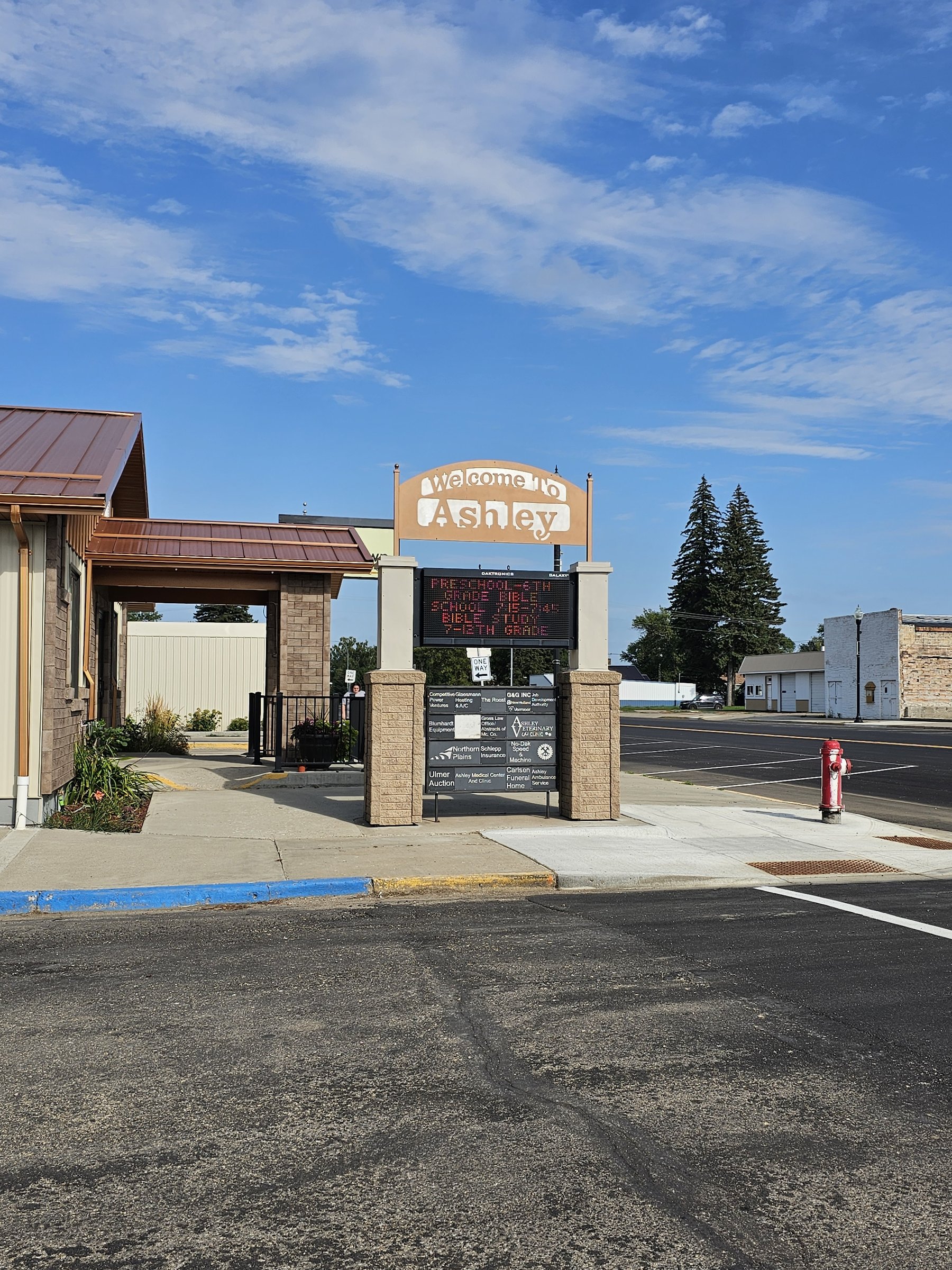
But one of the most emotional Jewish moments of our entire fifty state journey happened much farther south, near Ashley.
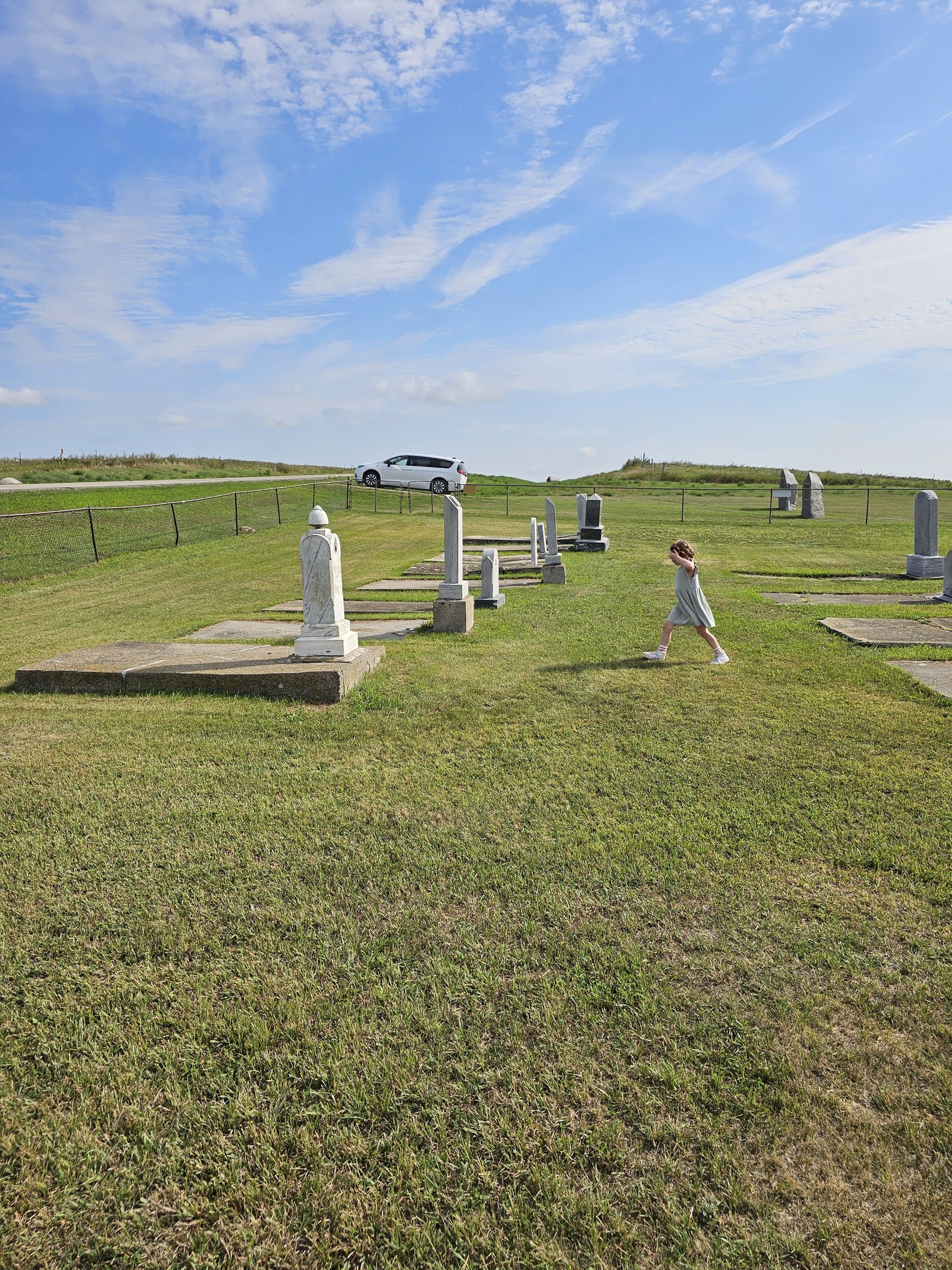
In the middle of the vast North Dakota prairie, we searched for an old Jewish cemetery left behind by a farming community that disappeared generations ago. A local farmer helped point us in the right direction.
And then we found it.
Nothing around us but prairie, sky, and Jewish graves.
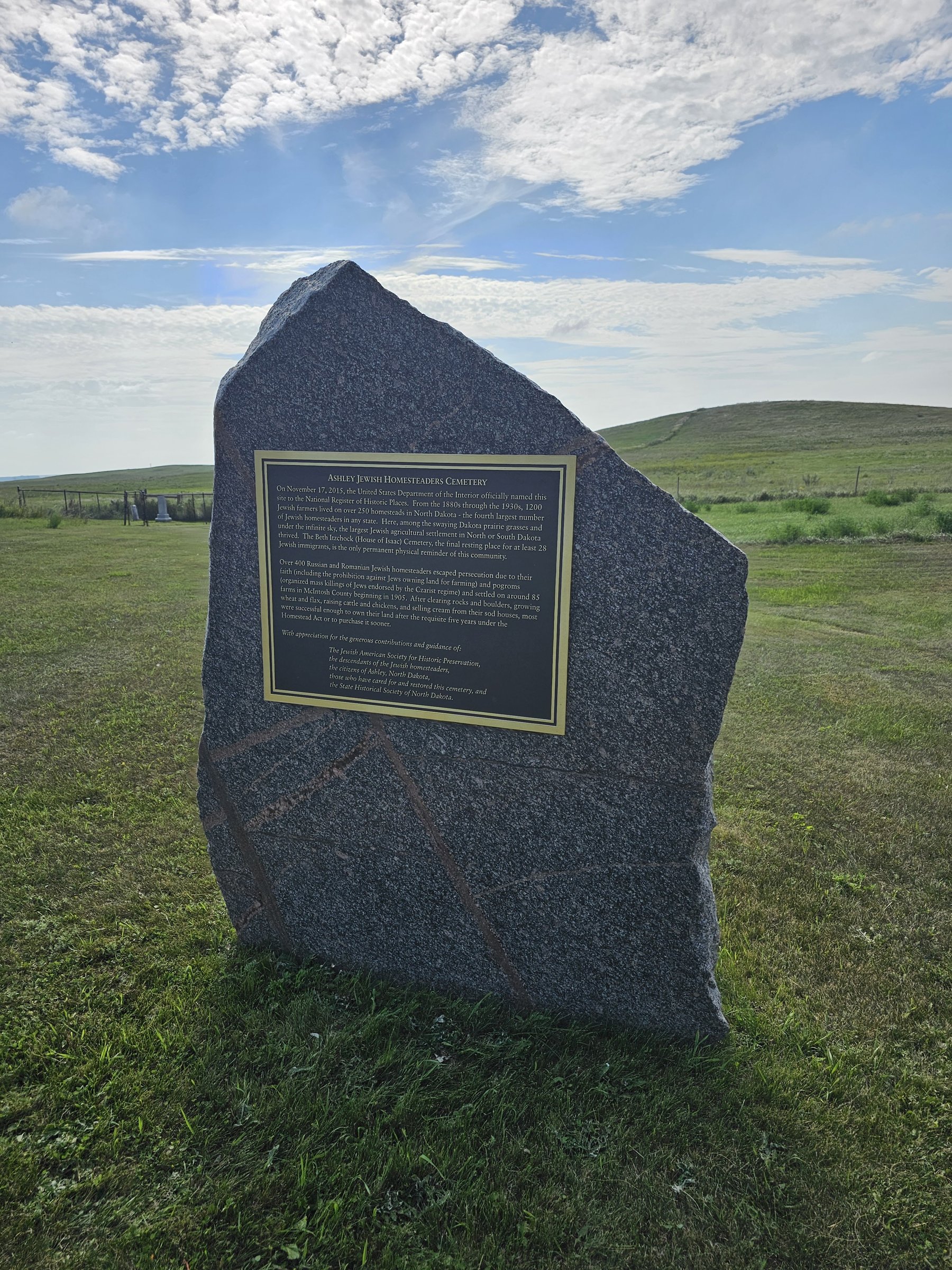
The Ashley Jewish Homesteaders Cemetery is one of the last physical reminders of hundreds of Jewish immigrants who came here more than a century ago, many fleeing persecution in Eastern Europe, and tried to build new lives as farmers on the North Dakota plains.
A little marker told their story, how they organized a Jewish congregation and somehow maintained Jewish life in this enormous emptiness.
I stood among the graves and said a prayer.
A tear dropped from my eye as I looked around and wondered when the last Jewish visitor had stood there and prayed for these souls.
More than a century ago, Jews gathered here to pray and hold onto their traditions with real mesirus nefesh.
So I was grateful to add my own little prayer.
Maybe not with a minyan of the living, but surrounded by those who had kept Jewish life alive here before me.
Jewish North Dakota may be tiny.
But standing in that cemetery, it felt enormous.
What Stayed With Me
What stayed with me about North Dakota was how quickly distance between people can disappear.
In Medora, two families who looked completely different from across the street ended up talking for nearly an hour while our children played together.
That happened again and again throughout our fifty state journey. The landscapes, accents, religions, clothes, and ways of life changed.
But once people actually spoke to one another, the differences usually became much smaller.
North Dakota gave us a lot of open space.
It reminded me how little space there really needs to be between people.
Have a story, an idea, or a reason to connect?
For editorial inquiries, media, speaking, collaborations, historical research, or simply a story you think I should know I'd be glad to hear from you.
Contact Dov